Exploring Peru
Exploring Peru
Peru had been on my travel list for a long time, largely because of Machu Picchu and the opportunity to hike through the Andes. What I did not fully appreciate before visiting was just how much variety the country offers. In a relatively short period, we experienced historic cities, enormous Inca ruins, glaciated mountains, high-altitude lakes, cloud forests, tropical vegetation, traditional markets, and some of the best food I have encountered while traveling.
The centerpiece of the trip was a five-day trek that combined portions of the Salkantay and Inca trails before ending at Machu Picchu. Altogether, we hiked roughly 50 miles through some of the most diverse landscapes I have ever seen.
Cusco
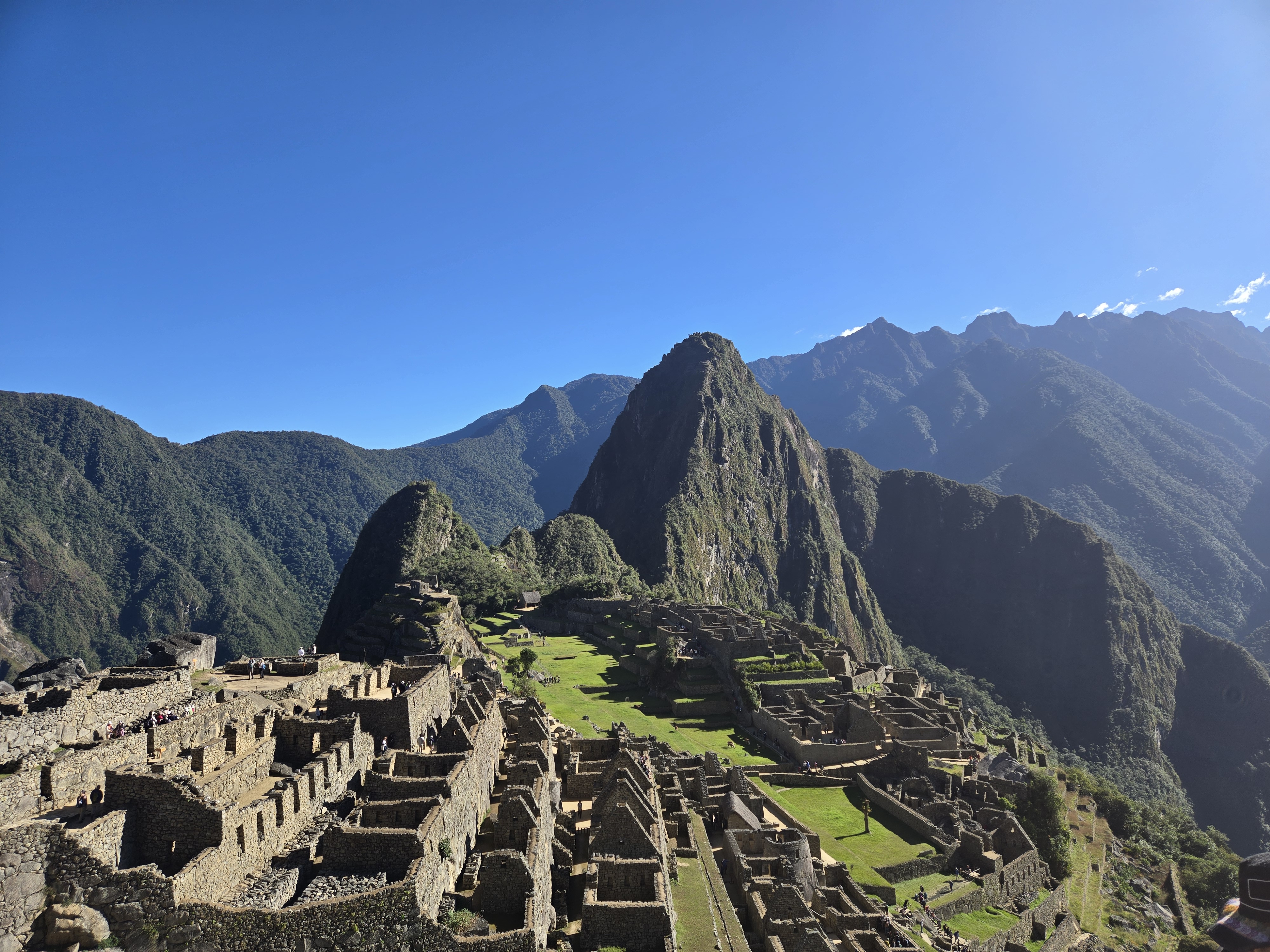
Our journey began in Cusco, the historic capital of the Inca Empire. The city sits at approximately 3,400 meters, or 11,150 feet, above sea level, so it also served as our introduction to the effects of high altitude.
To get there, we flew from Lima to Cusco. I had heard that the flight across the Andes and the approach into Cusco could sometimes be bumpy because of the mountainous terrain, but our flight was relatively smooth. The transition is still dramatic: in a little over an hour, you go from coastal Lima to a city sitting more than 11,000 feet above sea level.
While we were in Cusco, we stayed at Taypikala Hotel Cusco. Its location made it convenient for exploring the historic center while also giving us a comfortable place to return to while adjusting to the altitude.
Another thing that stood out was how international the travel community around Cusco is. We met several other people from the United States during the trip. Running into other Americans along the Cusco-Sacred Valley-Machu Picchu route was not unusual, and meeting travelers from different places became part of the experience.
The altitude was noticeable, but it was not as bad as I expected. I did not feel sick when we arrived, although walking uphill or climbing stairs made it immediately apparent that less oxygen was available. Even relatively simple physical activities required more effort than they would at sea level.
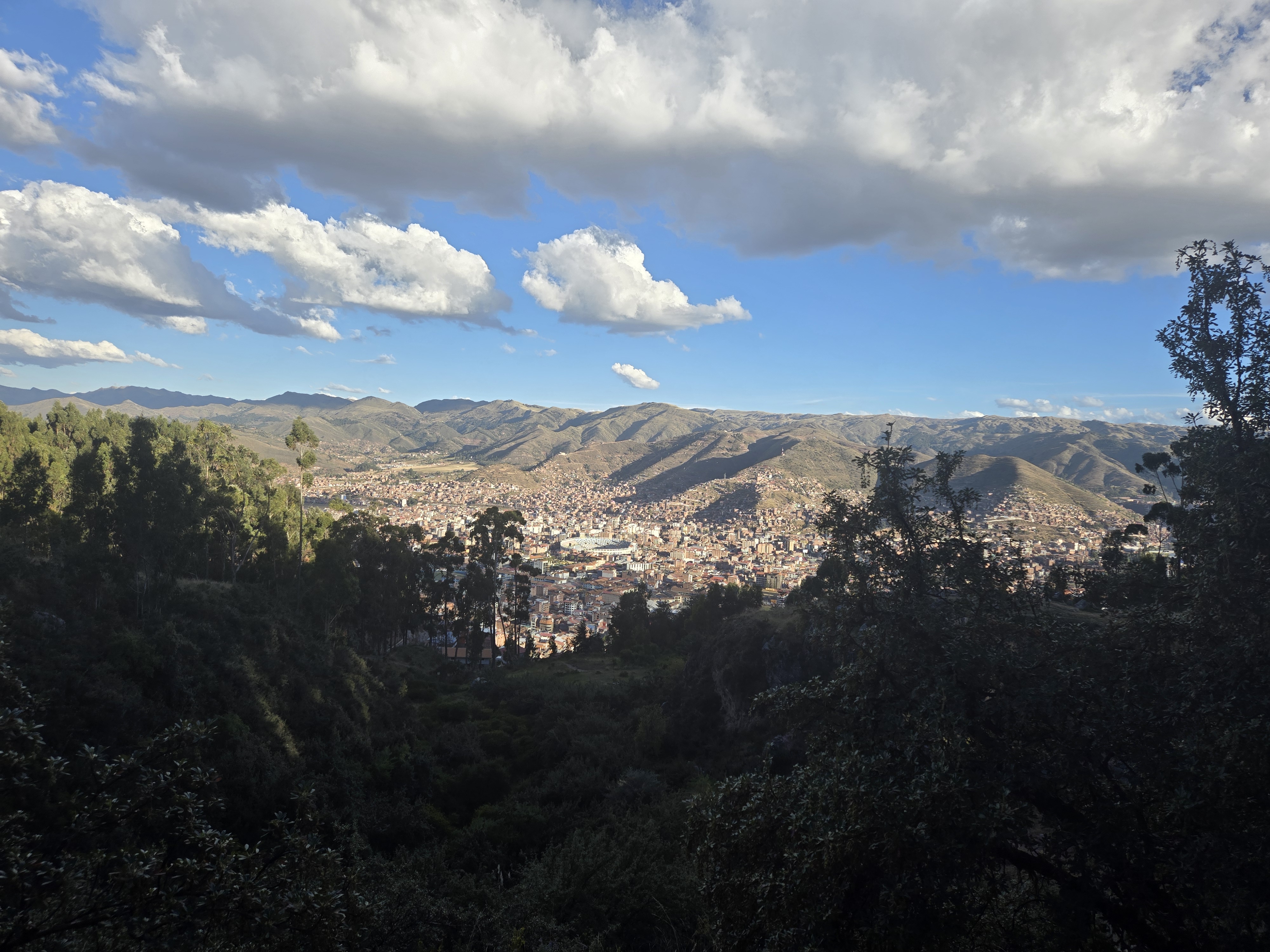
Cusco is a fascinating combination of Inca foundations and Spanish colonial architecture. In many places, colonial buildings and churches were constructed directly on top of older Inca stonework. Walking around the city feels like moving through several periods of history at once.
Some of the places we visited included:
Plaza de Armas — Cusco’s central square, surrounded by colonial buildings, restaurants, shops, and historic churches.
Cusco Cathedral — A massive colonial cathedral containing religious artwork and architecture built over earlier Inca foundations.
Qorikancha — The former Inca Temple of the Sun, which was later incorporated into the Spanish Convent of Santo Domingo.
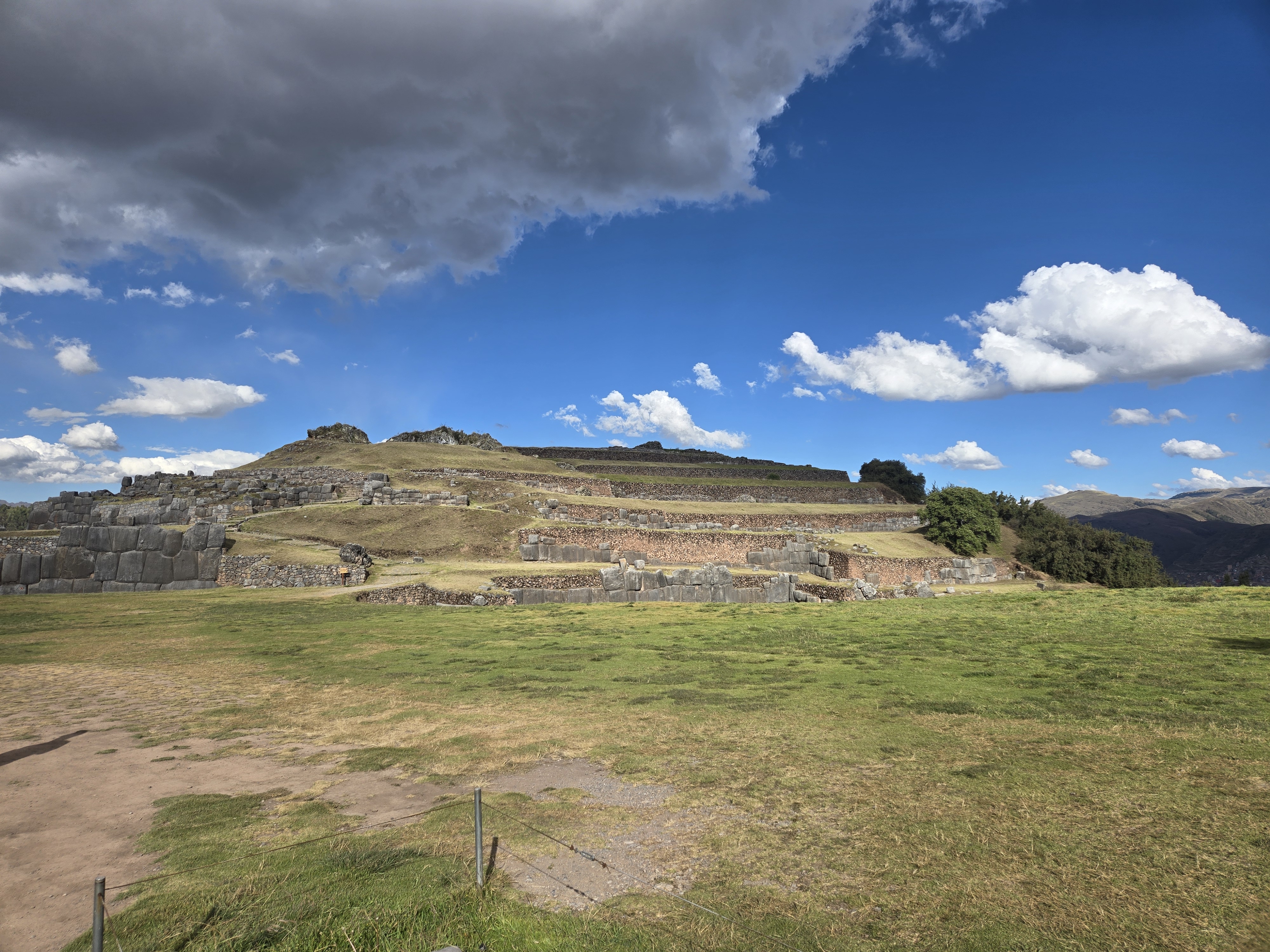
Sacsayhuamán — An enormous Inca complex overlooking Cusco, known for its precisely fitted stone walls.
Centro de Textiles Tradicionales del Cusco — A cultural center preserving traditional Andean weaving techniques and textile designs.
San Pedro Market — A busy local market filled with produce, prepared food, fruit juices, spices, textiles, and everyday goods.
We visited several additional ruins and cultural sites throughout Cusco and the surrounding region. One of the most impressive aspects of the Inca sites was the scale and precision of their stonework. Many of the stones are enormous, irregularly shaped, and fitted together so precisely that almost no space remains between them.
The contrast between historic and modern construction was also interesting. Alongside the famous Inca stonework, we saw a great deal of adobe and other earth-based construction, especially in smaller buildings and more rural areas. Peru has a very long tradition of building with earth; adobe masonry and tapial, or rammed earth, remain important construction methods. At the same time, many homes and small businesses we passed used reinforced-concrete post-and-beam frames, often with visible rebar. Seeing these different construction methods side by side made the built environment almost as interesting to observe as the archaeological sites themselves. SENCICO has more information on Peru’s tradition of adobe and earthen construction.
The Sacred Valley
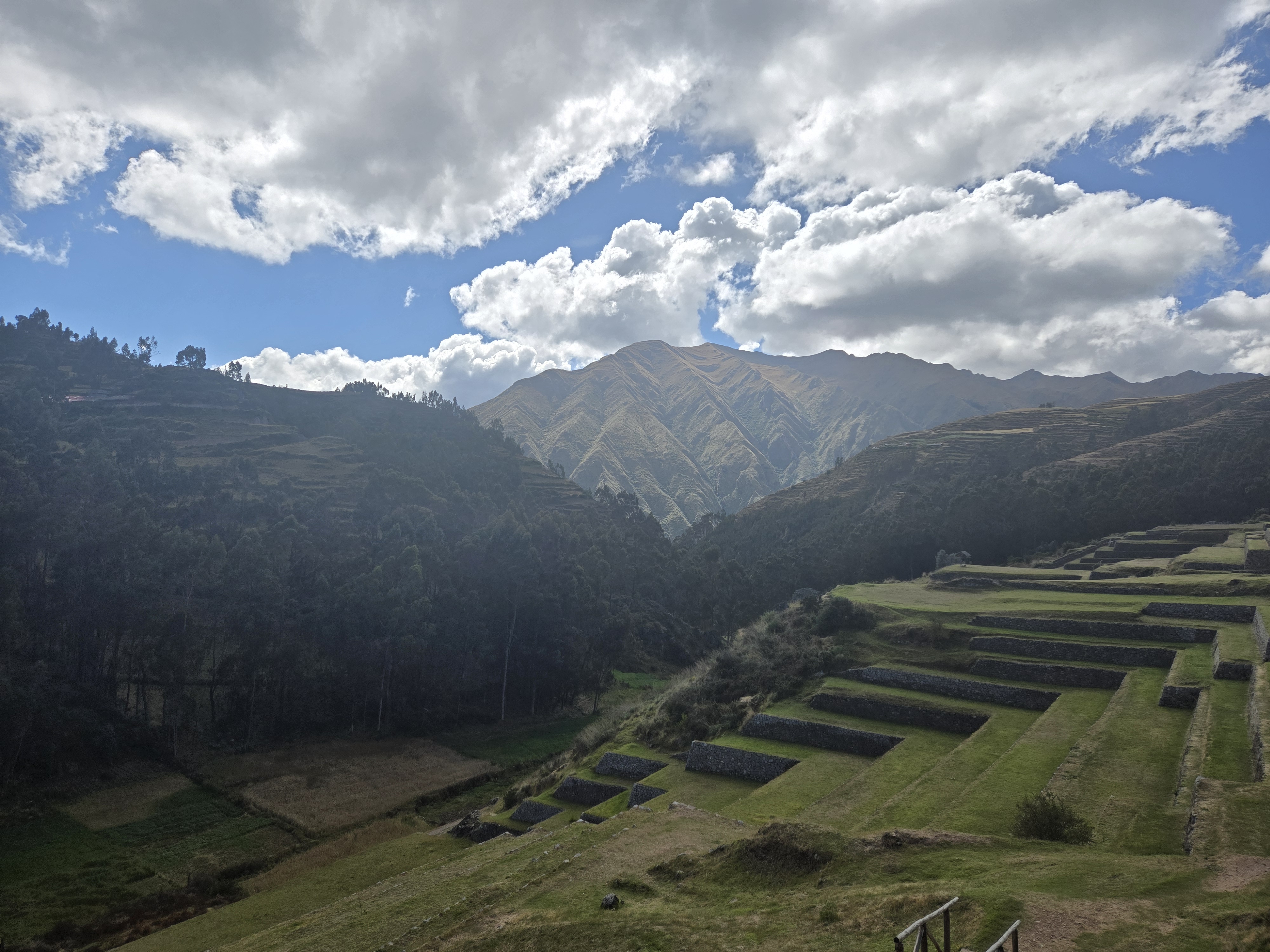
We also traveled through the Sacred Valley, visiting areas such as Pisac and Ollantaytambo. The valley contains farmland, villages, mountains, archaeological sites, and terraces that demonstrate how effectively the Incas adapted to the mountainous terrain.
Pisac added another perspective on how the Incas organized settlements around the terrain. Its archaeological complex sits high above the modern town and includes agricultural terraces, residential areas, ceremonial spaces, and broad views of the valley below. The modern town is also known for its market, making Pisac a place where the archaeological landscape and present-day community sit very close together.
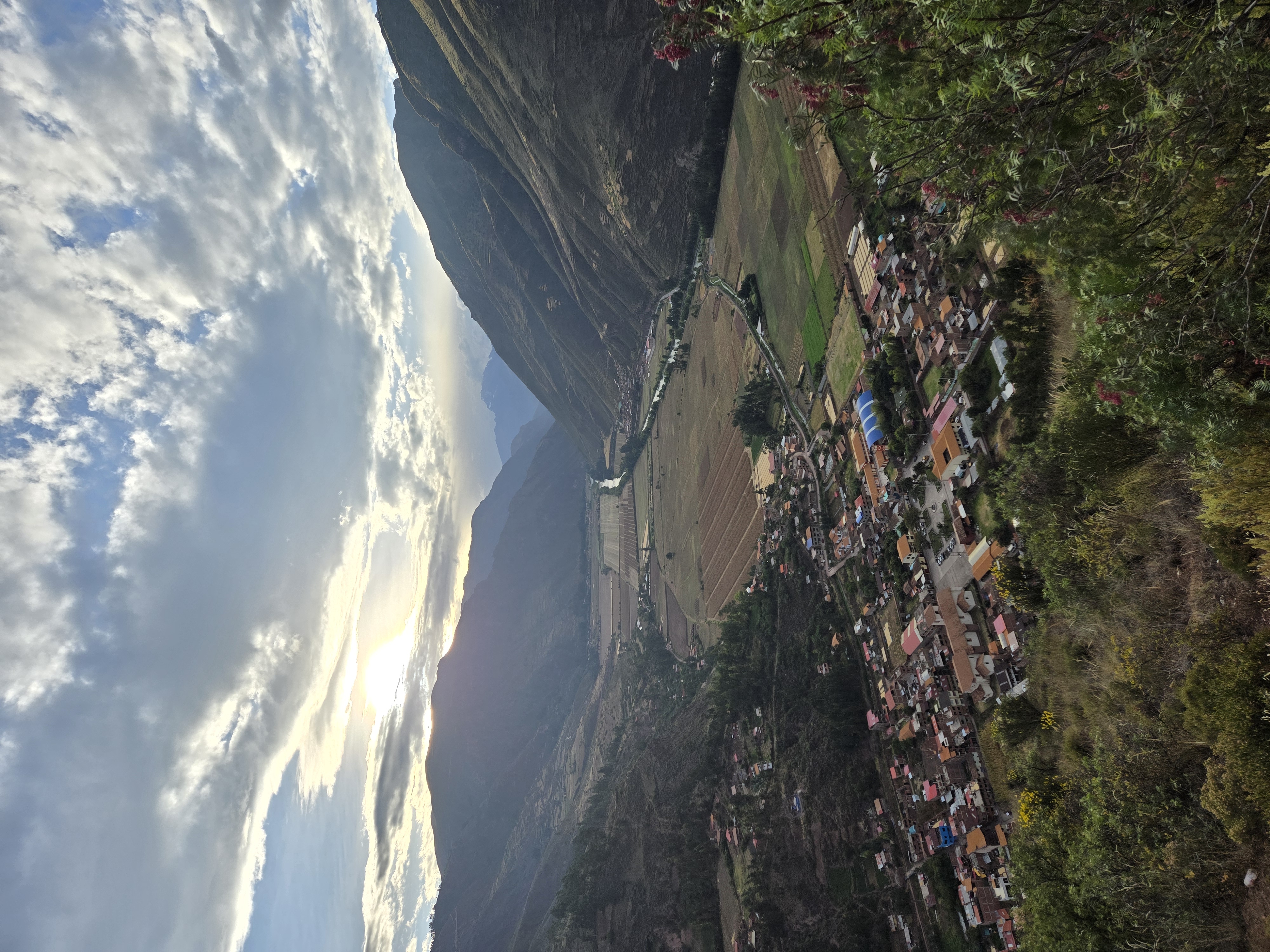
Ollantaytambo was especially memorable. The town still follows portions of its original Inca street plan and sits beneath an impressive archaeological complex built into the mountainside. It was also one of the major staging points for travelers heading toward the Inca Trail and Machu Picchu.
We also learned about and visited Vilcabamba, a region with a very different place in Inca history. After the Spanish conquest of Cusco, the Vilcabamba region became the final major stronghold of Inca resistance associated with Manko Inka and his successors. The area contains sites such as Vitkos-Rosaspata and Espíritu Pampa, and learning about it helped connect the ruins we were seeing to the final decades of independent Inca rule rather than treating Inca history as something that simply ended when Cusco fell. The Peruvian Ministry of Culture has additional background on Vilcabamba and its historical significance.
The Nazca Lines and María Reiche
Another part of Peru we learned about was the Nazca Lines, the enormous geoglyphs spread across the desert of southern Peru. The contrast with Cusco and the Andes could hardly have been greater. Instead of mountains, terraces, and dense vegetation, the landscape around Nazca is extremely dry and open, which is one reason the lines have remained visible for so long.
The geoglyphs include long straight lines, geometric forms, and recognizable figures such as the hummingbird, monkey, spider, and other animals. Their exact purpose is still debated. What is clear is that they were created by pre-Hispanic cultures over many centuries and are now protected as part of the UNESCO-listed Lines and Geoglyphs of Nasca and Palpa.
We also learned about María Reiche, the German-born mathematician and researcher who devoted much of her life to measuring, studying, publicizing, and protecting the Nazca Lines. Her work became inseparable from the modern history of the site. The Peruvian government later recognized her as an honorary conservator, and the Ministry of Culture credits her with decades of research and conservation work.
The site can be experienced from observation towers and surrounding high ground, while small-aircraft overflights provide the widest view of the geoglyphs. Peru Travel’s Nazca guide is a useful starting point for anyone planning a visit.
The Salkantay Trek
The most memorable part of the trip was our five-day trek through the Andes. The route covered roughly 50 miles and combined the Salkantay route with portions of the Inca Trail.
Length: Approximately 50 miles
Duration: Five days
Highest point: Salkantay Pass at approximately 4,630 meters, or 15,190 feet
Terrain: Mountain valleys, glaciated peaks, high-altitude passes, cloud forest, jungle, and Inca trails
Final destination: Machu Picchu
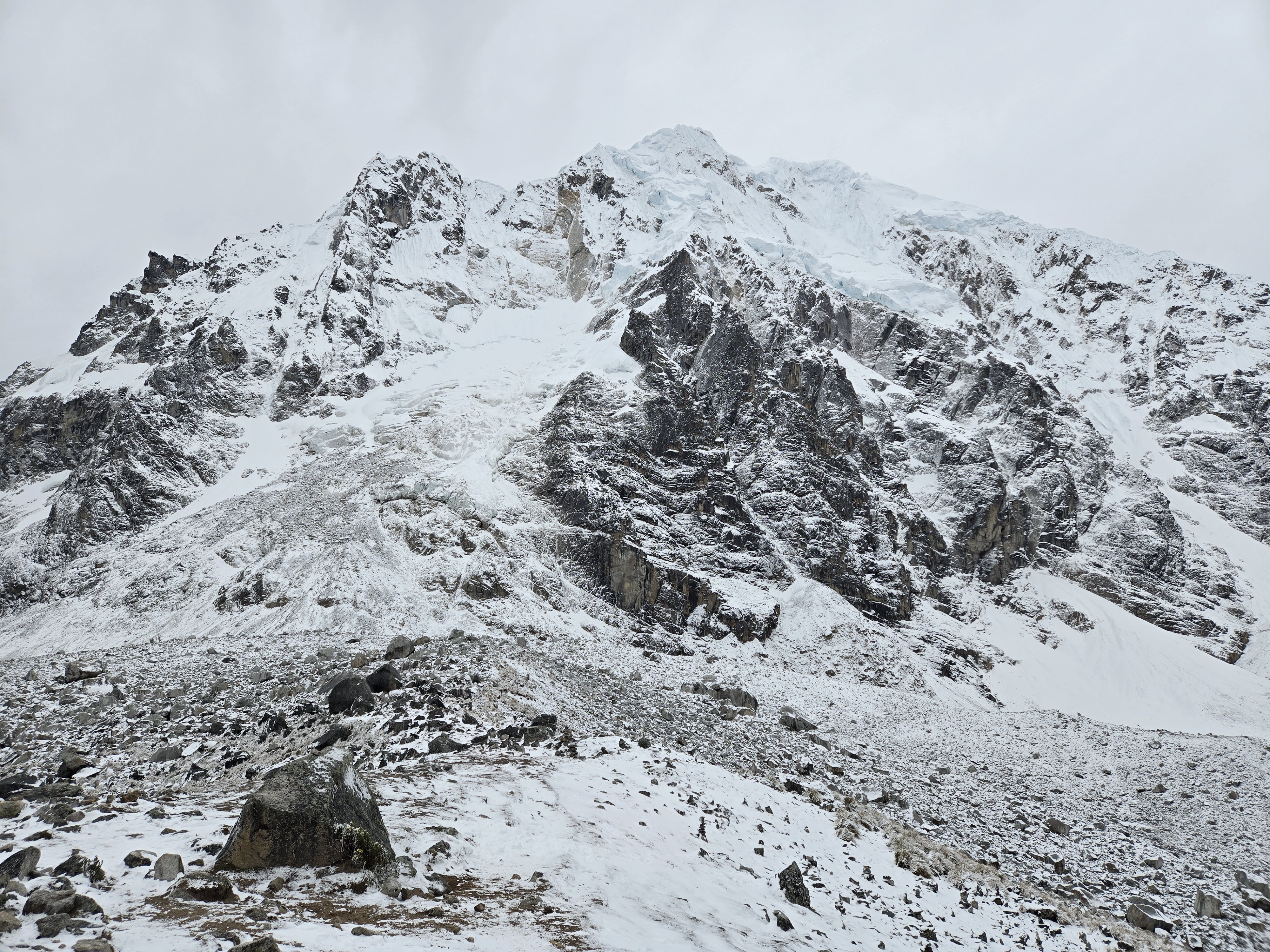
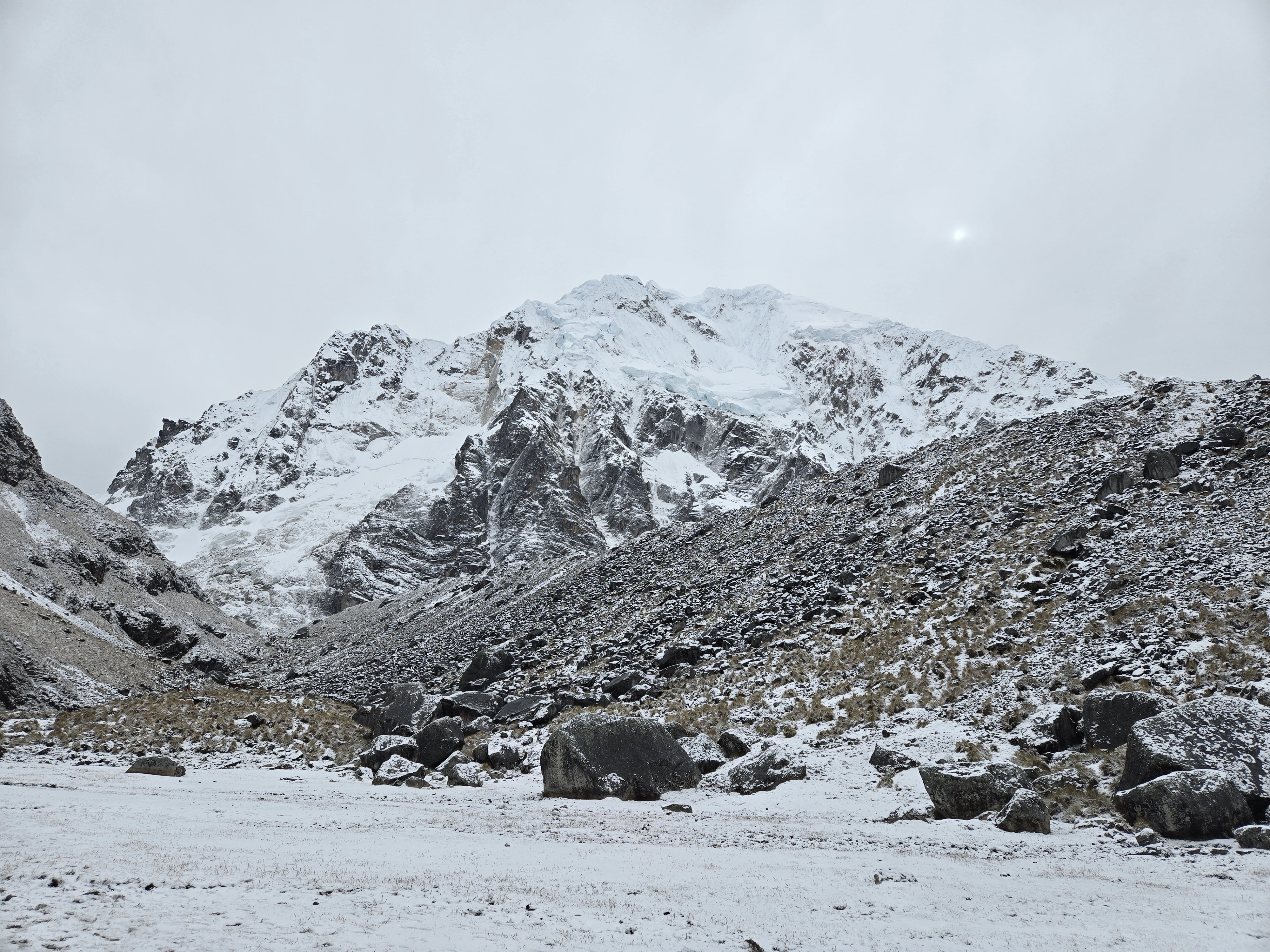
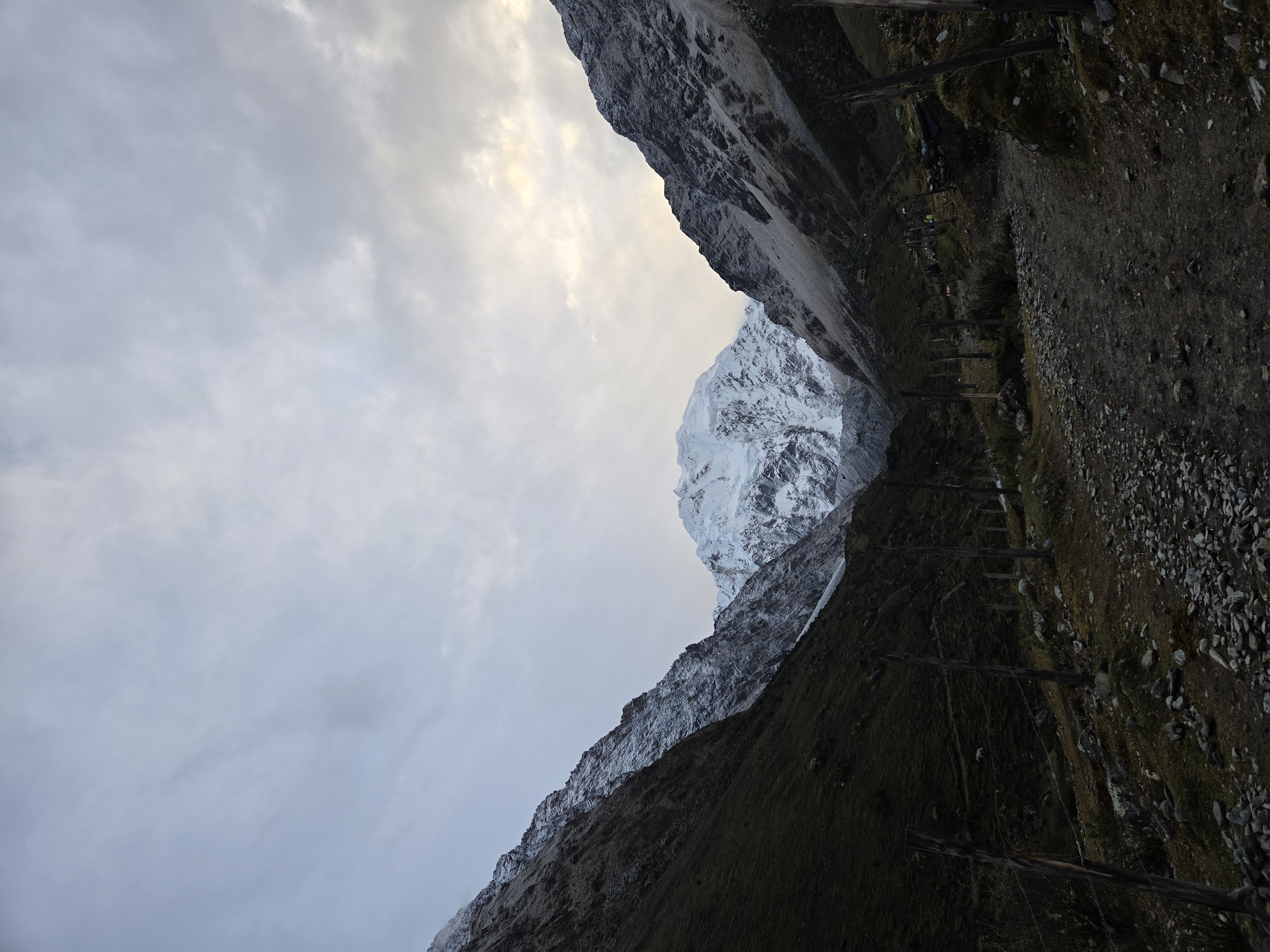
At the beginning of the trek, the landscape was open and mountainous, with distant glaciers and snow-covered peaks surrounding the trail.
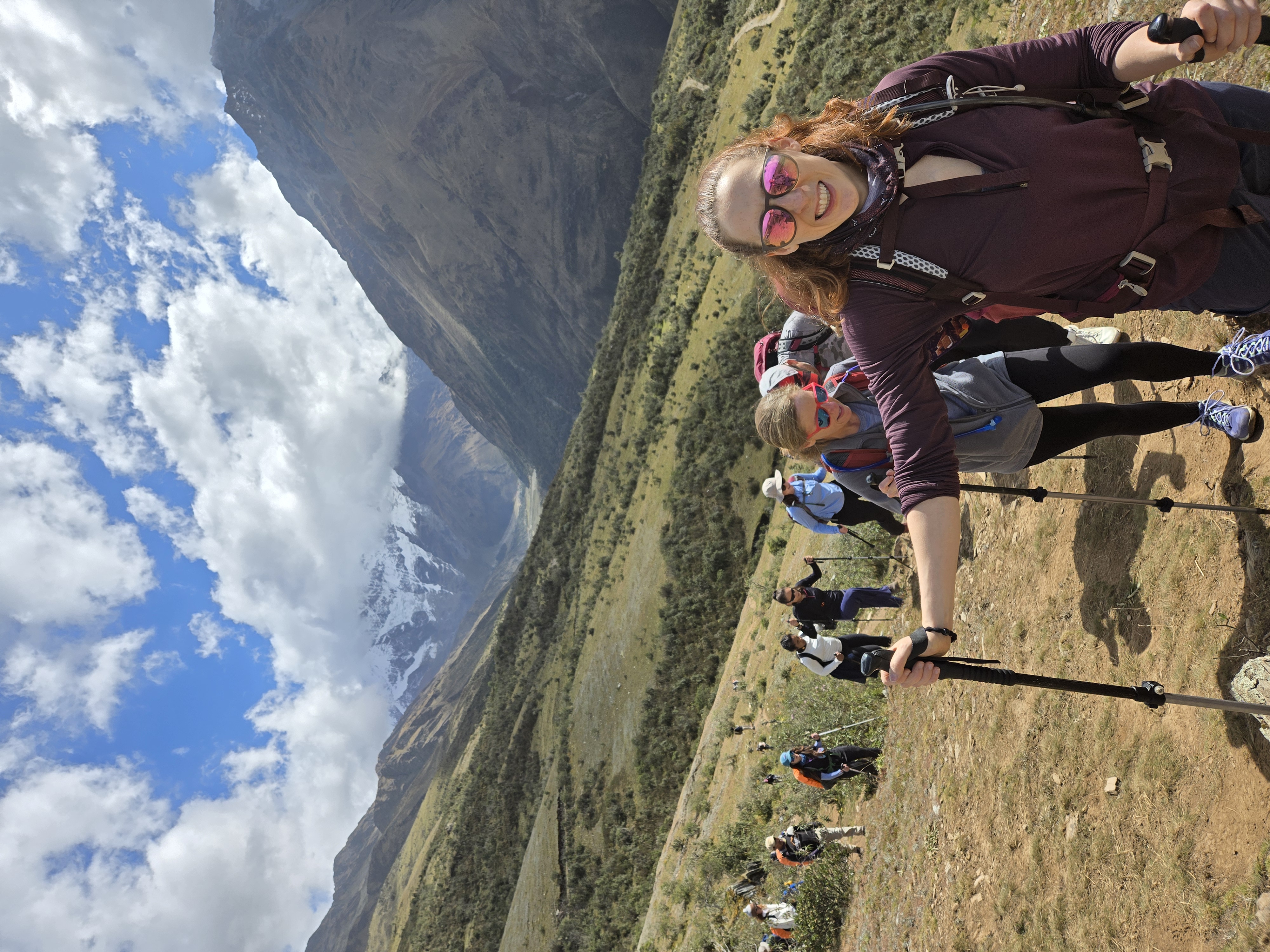
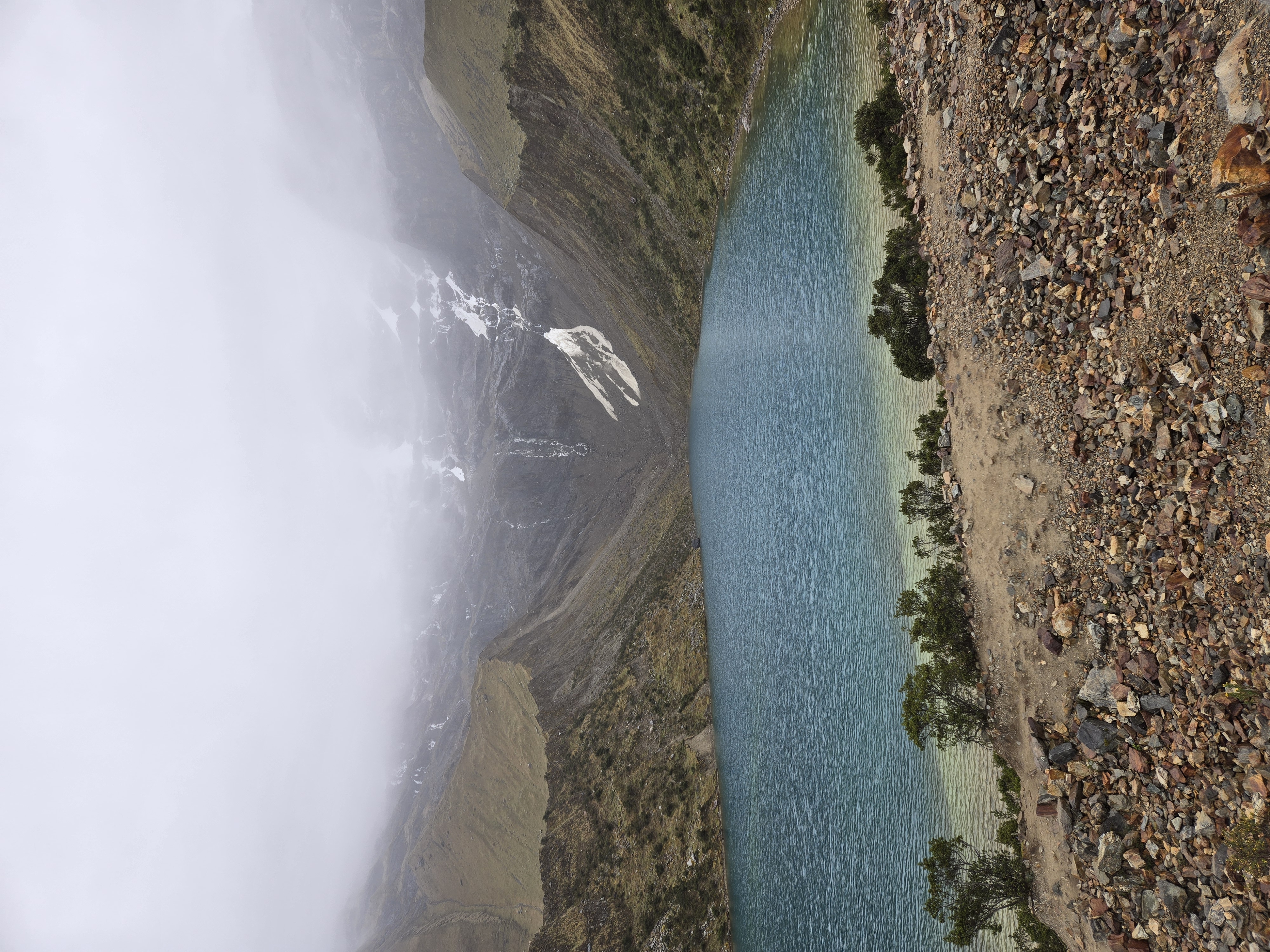
Humantay Lake
One of our first major destinations was Humantay Lake, a turquoise glacial lake beneath the surrounding mountains. The climb to the lake was steep, especially while we were still adjusting to the altitude, but the view at the top made the effort worthwhile.
Crossing Salkantay Pass
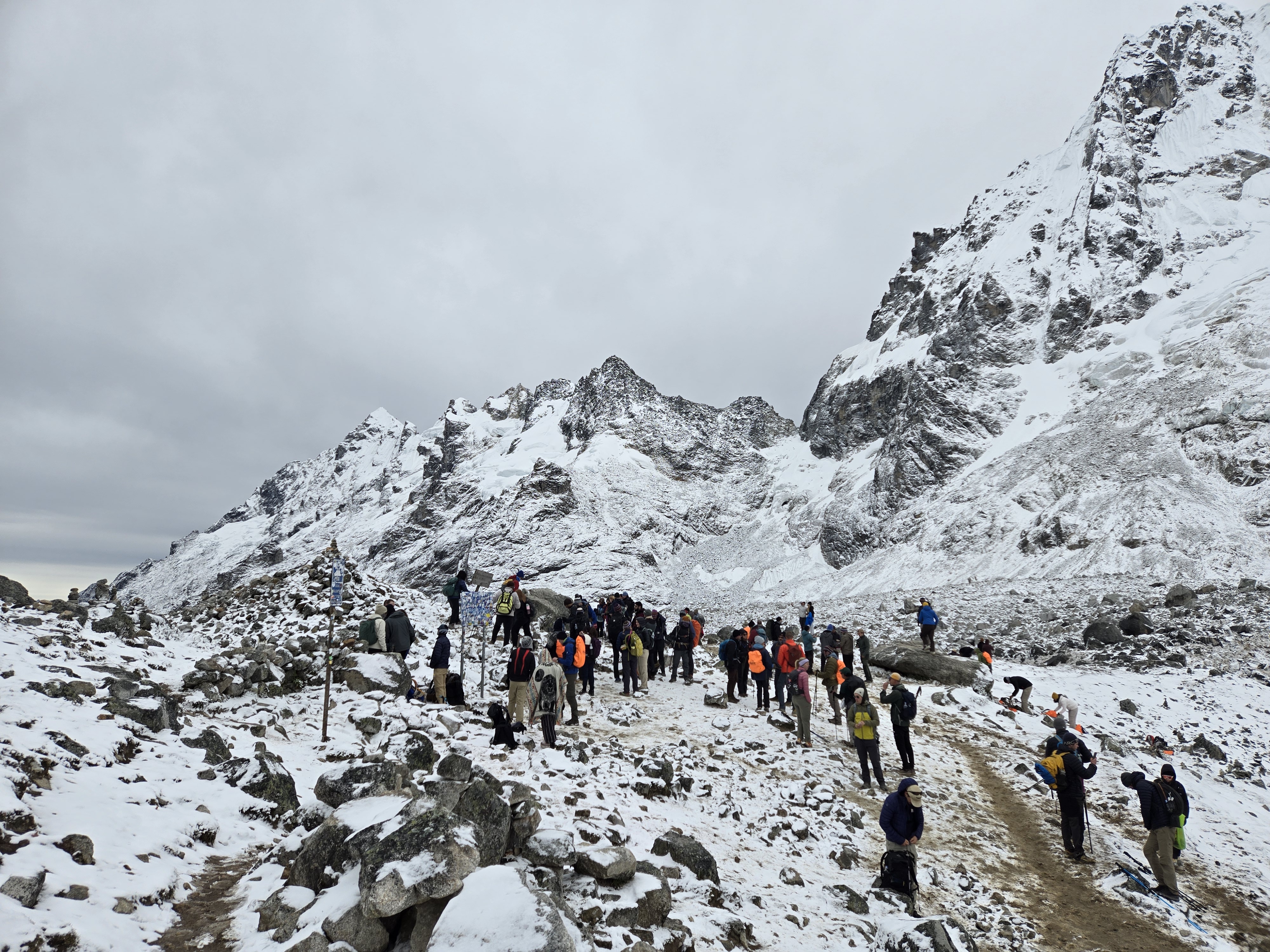
The most difficult section was the climb to Salkantay Pass, the highest point of the trek at approximately 4,630 meters, or 15,190 feet.
The trail itself was manageable, but the altitude made every step more demanding. Near the pass, the air felt noticeably thinner, and maintaining a steady pace became more important than moving quickly.
Unfortunately, I also caught a virus during the trek. The illness was not caused by the altitude, but the fever and congestion made breathing at high elevation much more difficult. Reaching the pass while sick added an unexpected challenge, but it also made standing at the summit feel even more rewarding.
Overall, I would not describe the trek as excessively difficult for someone who is reasonably active. The biggest variable is the altitude. The distance and terrain require endurance, but the limited oxygen is what makes otherwise ordinary climbs feel much harder.
From Glaciers to Jungle
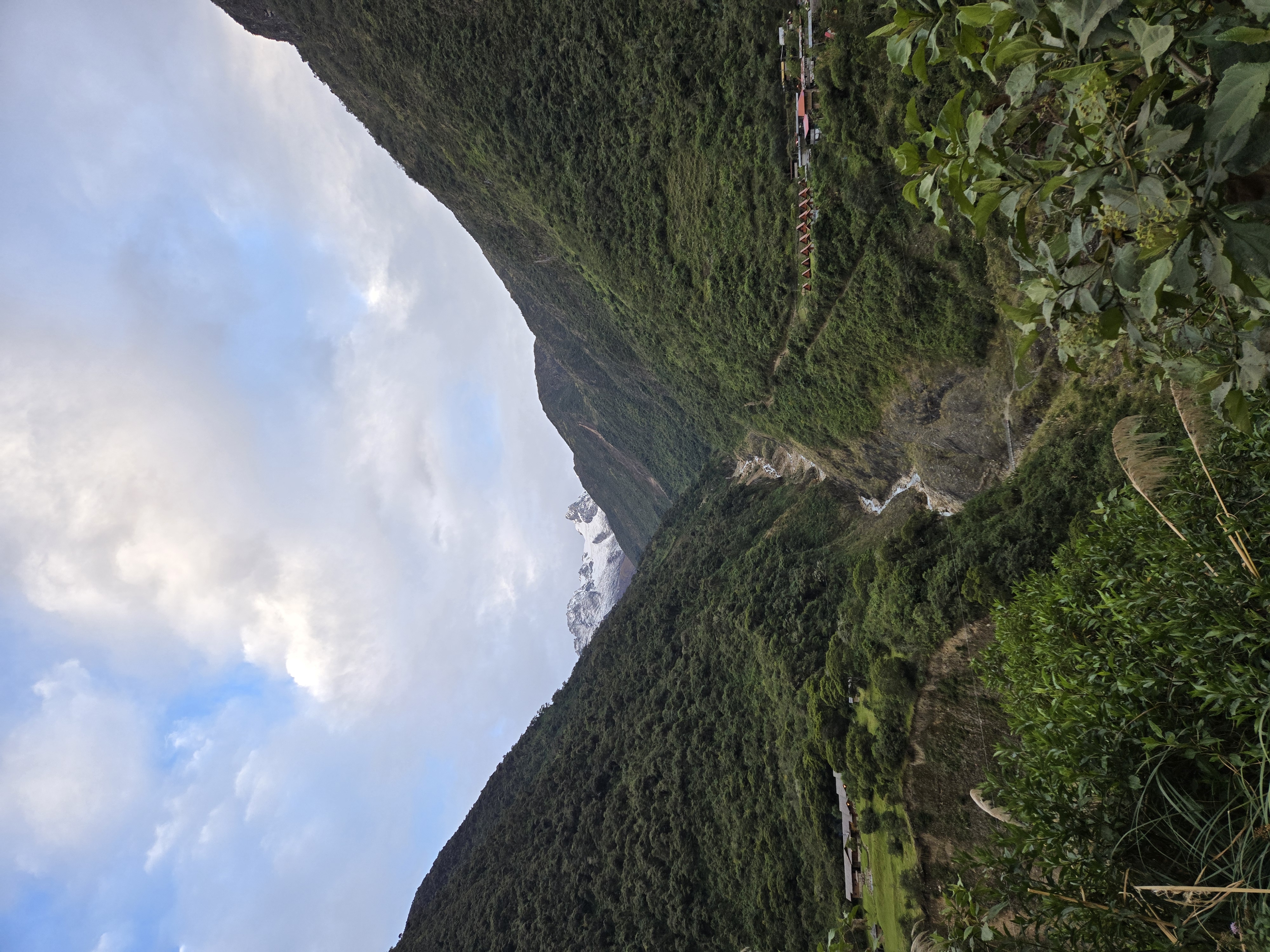
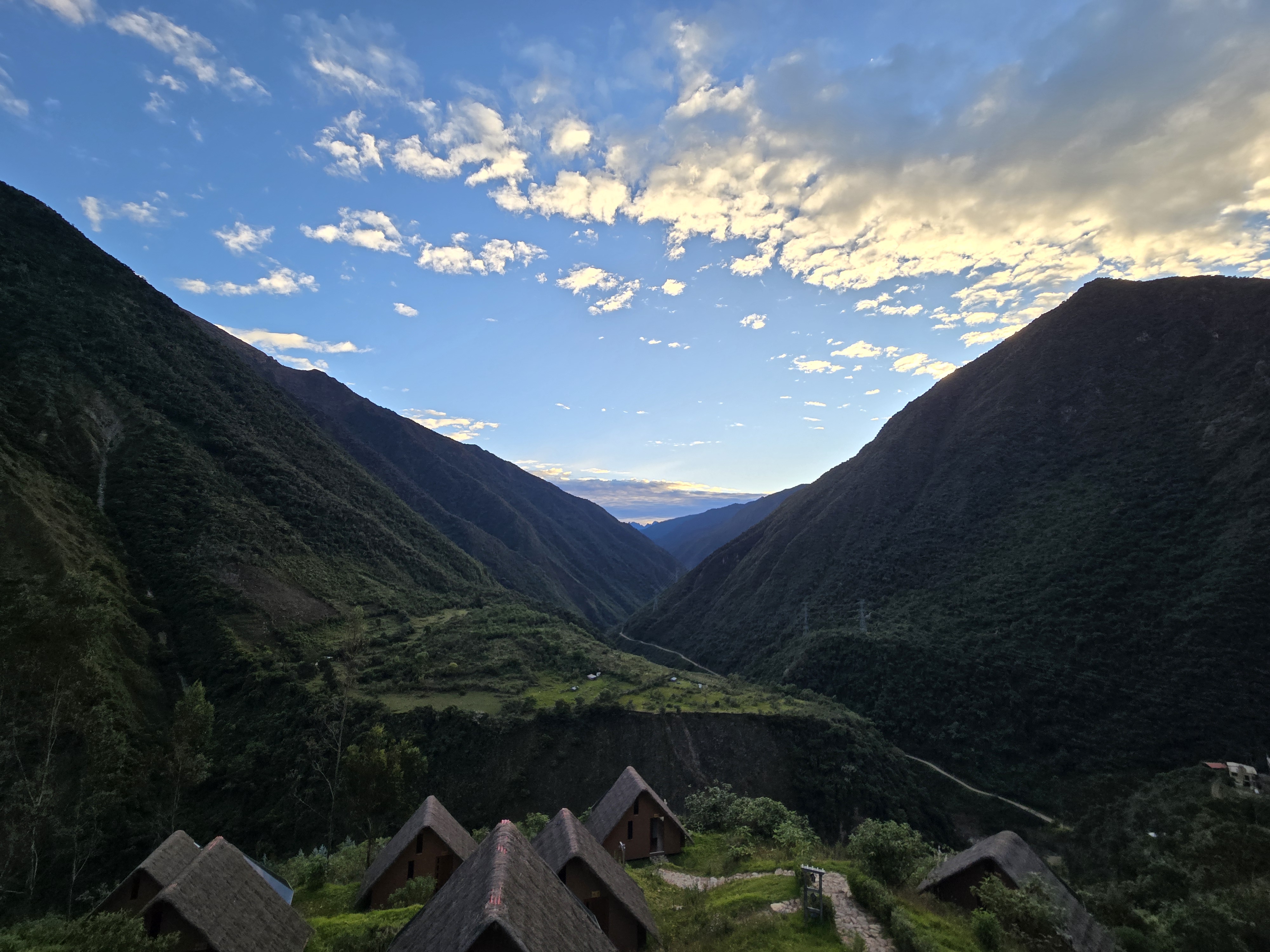
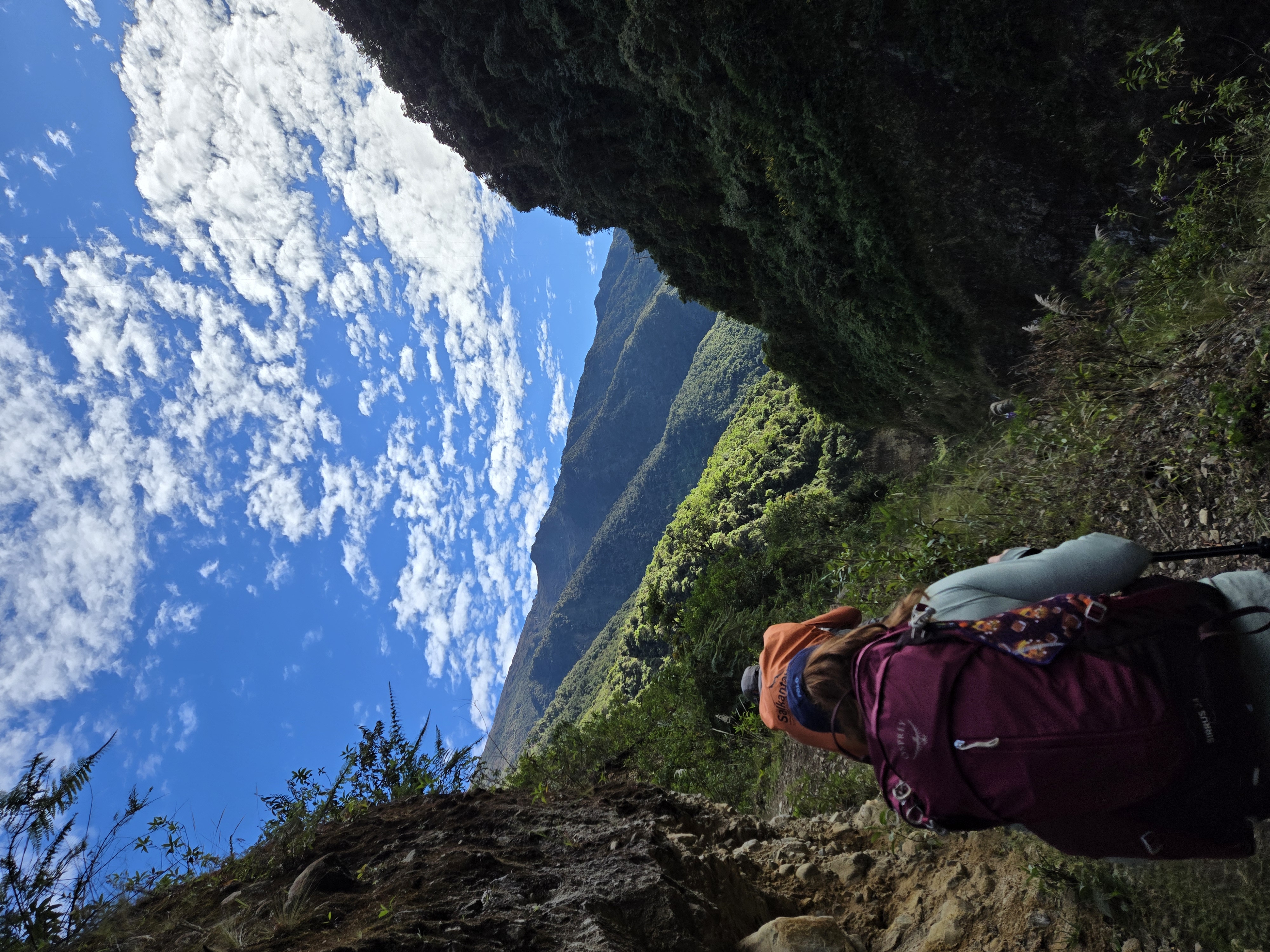
One of the most remarkable parts of the trek was how quickly the landscape changed. We began among glaciated mountains and high-altitude valleys, but after crossing the pass, we gradually descended into cloud forest and tropical rainforest.
That transition made Peru’s microclimates much more tangible. The Andes create enormous changes in altitude over relatively short distances, which in turn change temperature, rainfall, vegetation, and what can be grown. Across Peru, the dry Pacific coast, high Andes, cloud forest, and Amazon create very different ecological zones. Peru Travel notes that altitude is one of the major reasons the country contains so many distinct climates and ecosystems.
We could actually watch those environmental changes happen while hiking. At higher elevations the landscape was colder, rockier, and more exposed; lower down it became warmer and increasingly green. That helps explain why Peru can support such a wide range of crops and foods. Potatoes, corn, and other highland crops thrive in Andean environments, while lower and warmer areas support things like coffee, cacao, passion fruit, bananas, and sugar cane.
Within a relatively short distance, the environment changed from rocky, cold, and exposed to warm, green, and humid.
We saw a surprising amount of wildlife along the way, including insects, birds, and other animals adapted to the different elevations. One of the more unusual sightings was a high-altitude tarantula that our guide identified along the trail.
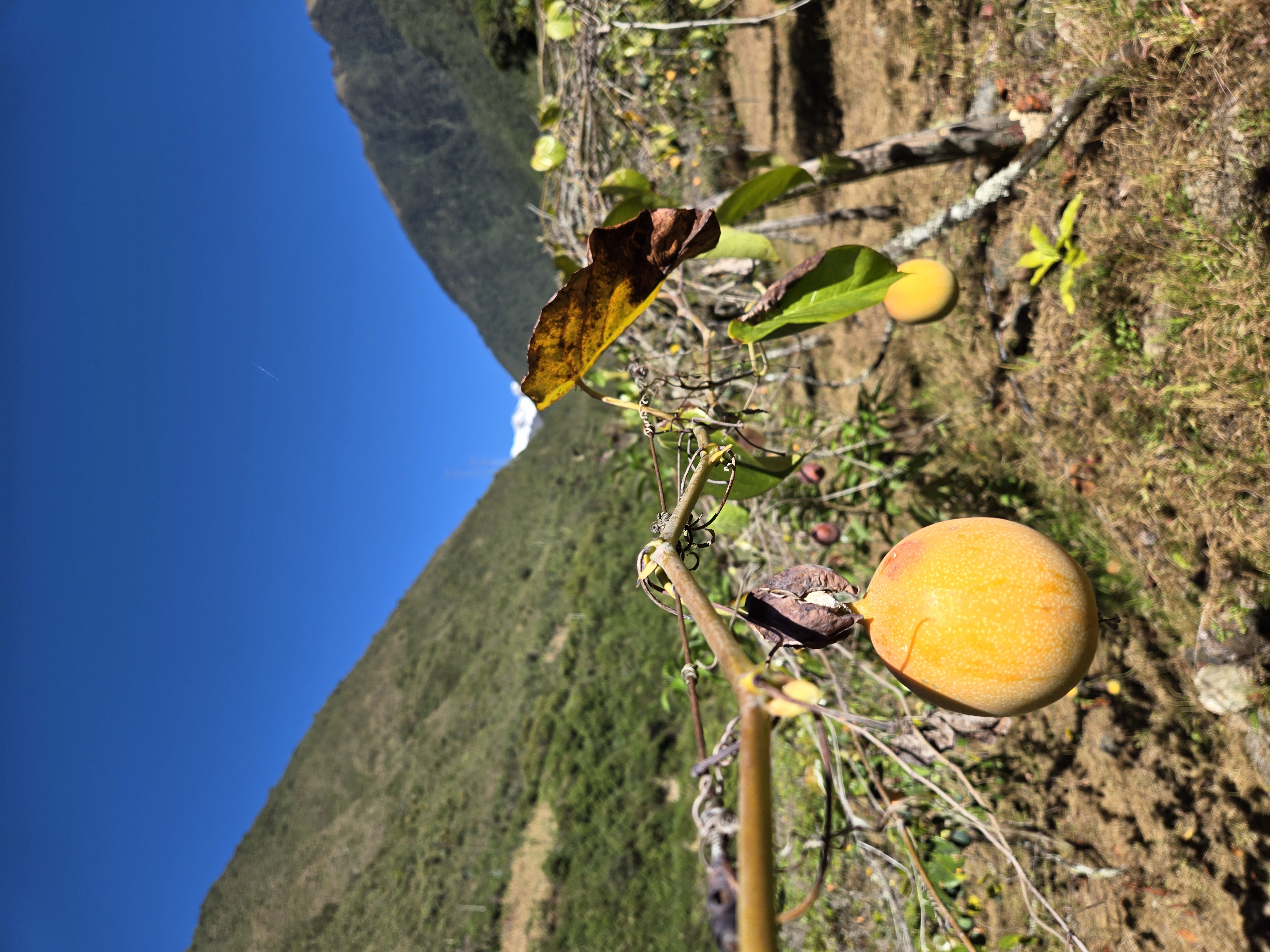
We also passed farms growing coffee, cacao, passion fruit, sugar cane, and other tropical crops. Being able to see and taste food directly where it was grown made this portion of the trip especially memorable.
Coffee and Chocolate
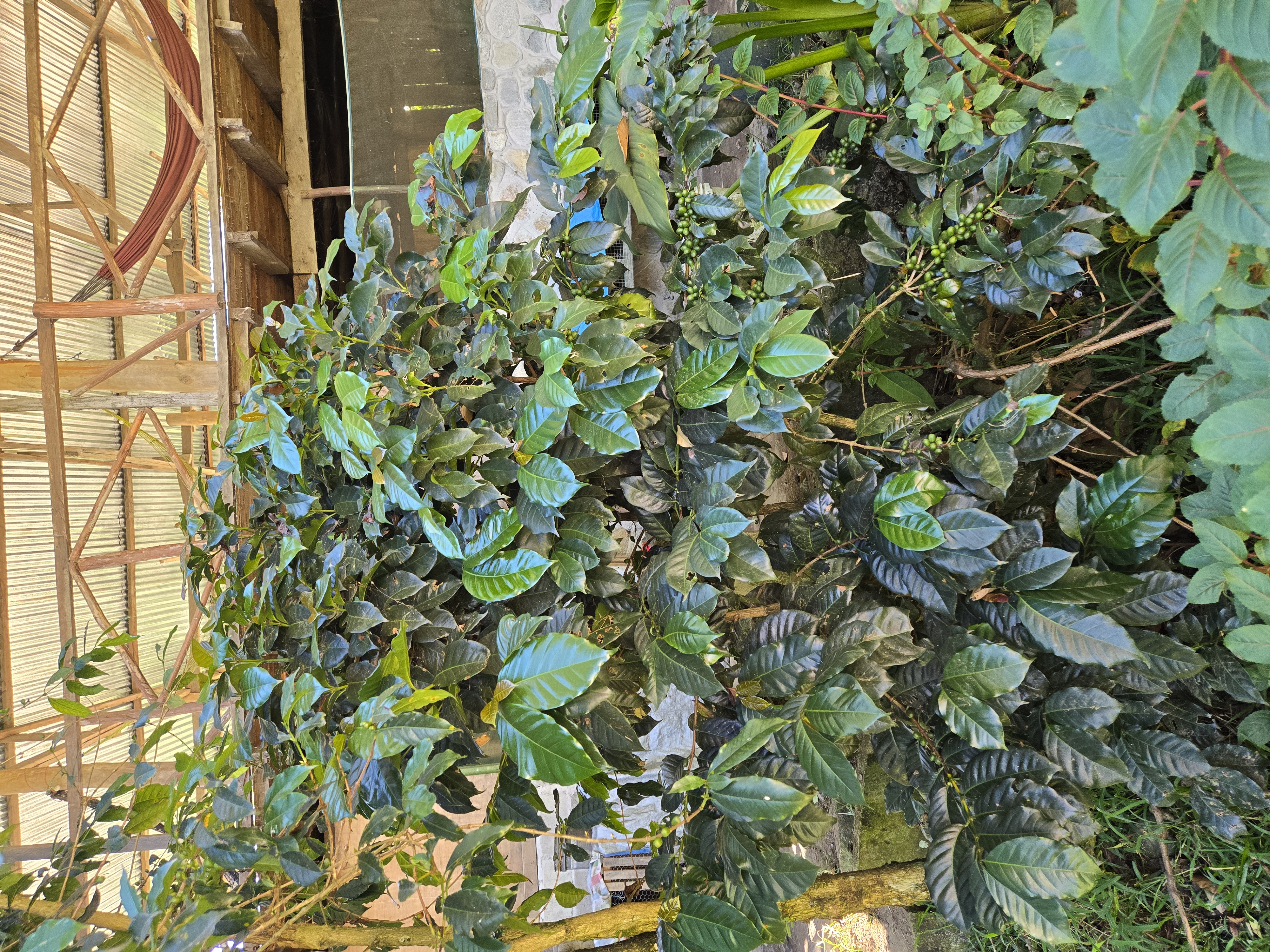
During the lower-elevation portion of the trek, we participated in a coffee-making experience. We started with raw coffee beans and worked through several of the steps involved in preparing them.
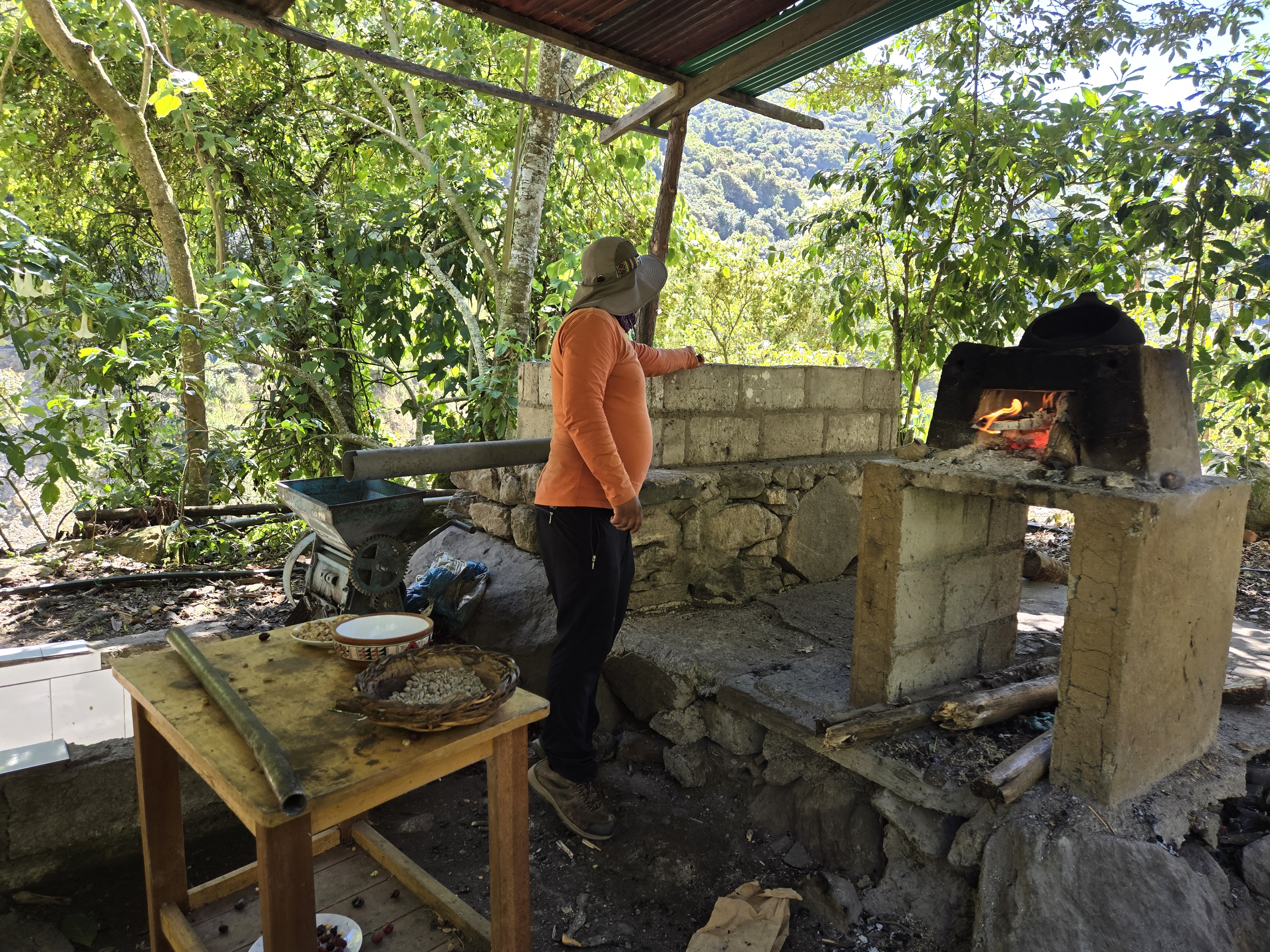
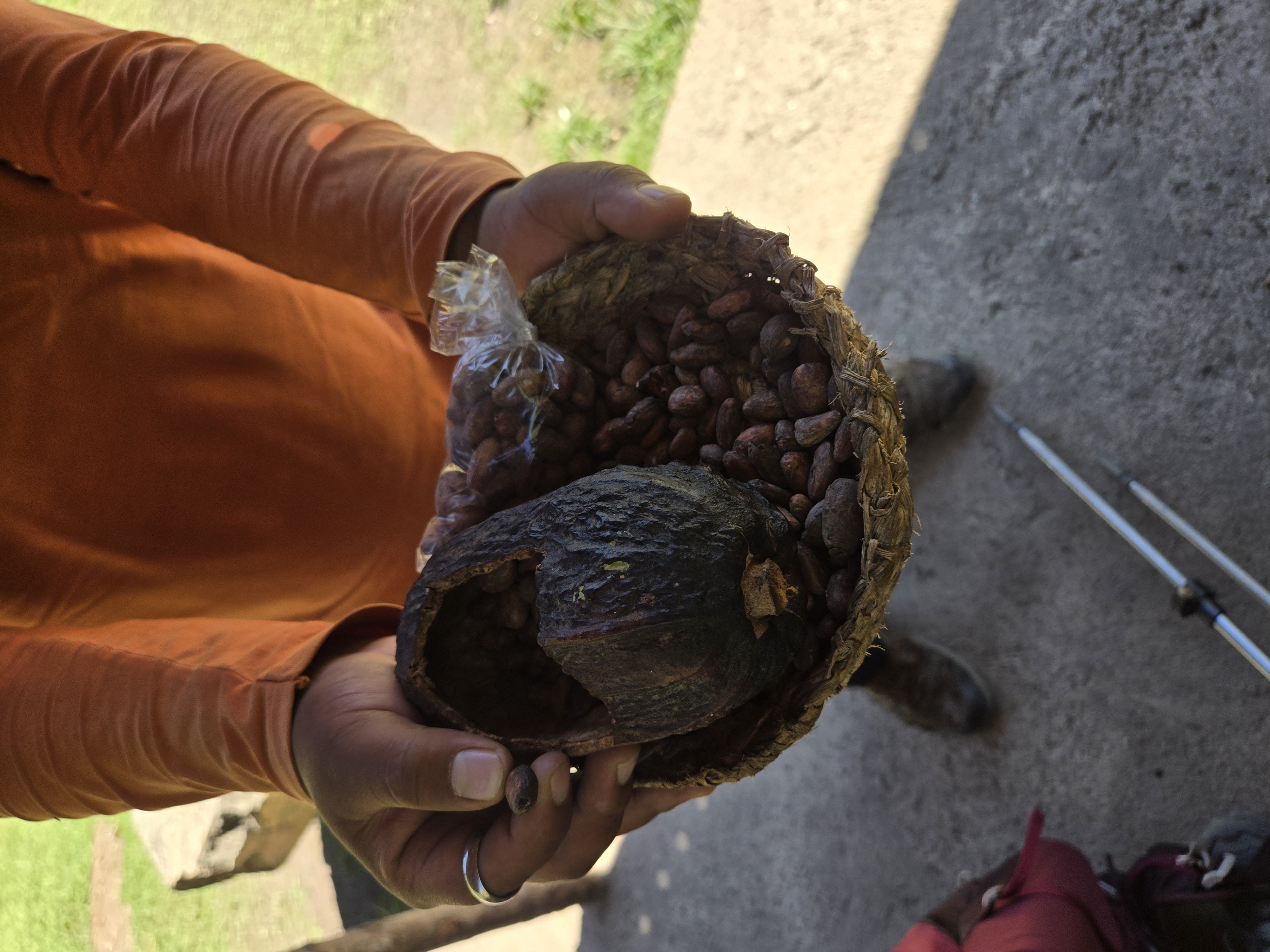
We also tasted raw cacao beans and learned more about how cacao is transformed into chocolate. Raw cacao tastes very different from the finished chocolate most people are familiar with, making it interesting to experience the ingredient closer to its original form.
Life on the Trail
The trekking company handled nearly all of the logistics. Our group had a guide, two chefs, and mules that carried much of the equipment between camps. At night, we stayed in a mixture of small lodges and glamping-style accommodations rather than carrying and setting up traditional tents ourselves.
The level of support made the trip considerably more comfortable than I originally expected. Meals were prepared for us each day, transportation was coordinated, and our guide explained the history, geography, plants, and cultural significance of the places we encountered.
The mules and horses were essential to how supplies moved along the trail, but they also reminded us that these are still narrow mountain paths. At one point, we saw another hiker get knocked off the side of the trail when a herd of mules and horses came through. Fortunately, he did not fall far and came away mostly scratched up, but watching it happen was a reminder of how quickly the terrain can become dangerous when people and pack animals are sharing the same narrow route.
We also spent a surprising amount of time talking with other travelers. We met several people from the United States as well as people from other parts of the world. Those conversations became another part of the trek; everyone was experiencing the same altitude, weather, long days, and changing landscape together.
Our guide also regularly chewed coca leaves. Coca has a long history in Andean culture and is commonly used by people living and working at high elevations. The leaves are also used in tea and are believed to help people manage fatigue and some of the effects of altitude.
There was a running joke that the Incas managed to build their enormous mountain complexes with a little help from coca leaves. Joking aside, the plant clearly has a deep cultural significance that goes far beyond its association with cocaine.
The Inca Trail
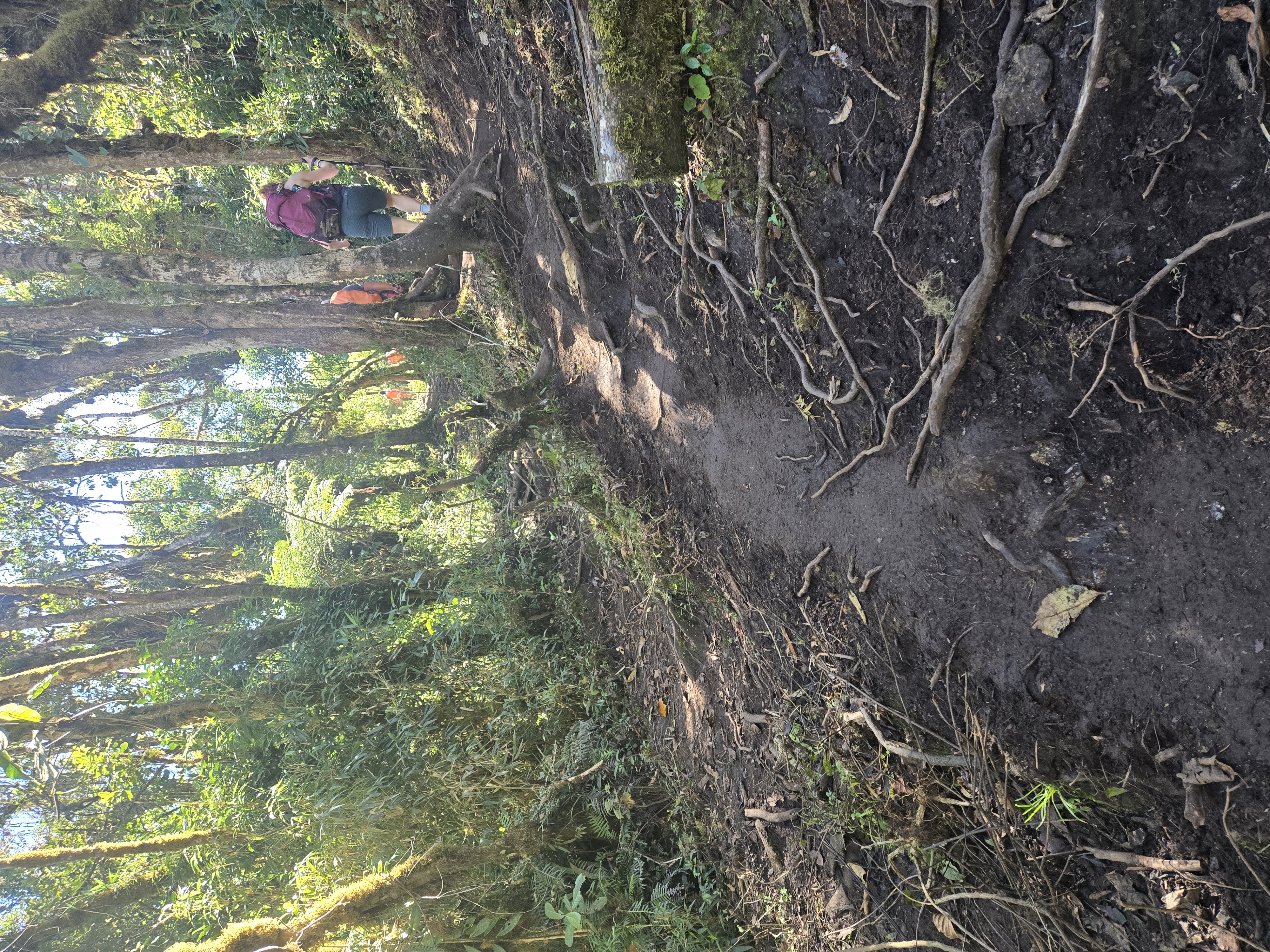
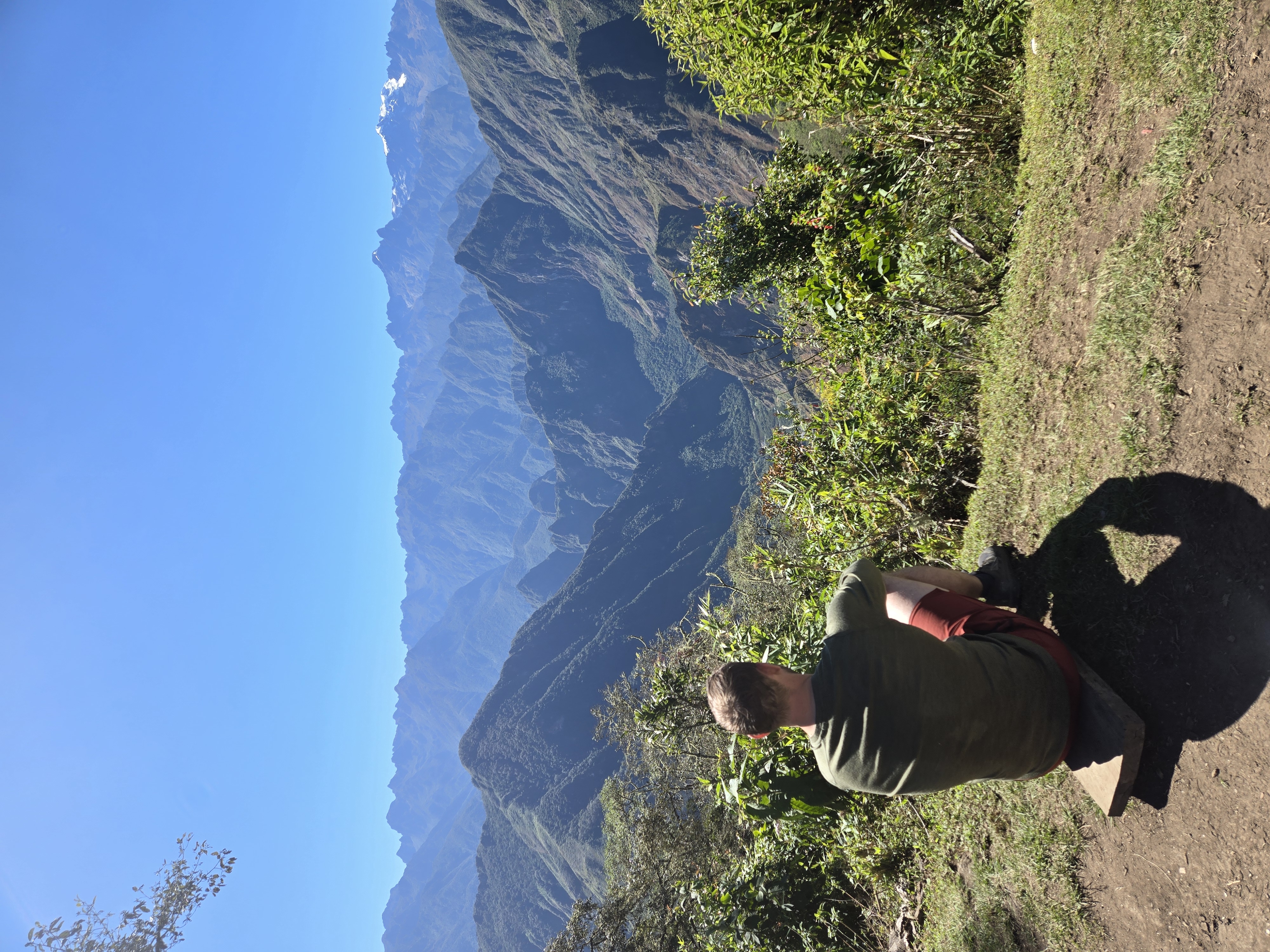
As we moved closer to Machu Picchu, portions of the route joined historic Inca trails. Hiking these sections provided a better appreciation for the scale of the Inca road system and the difficulty of building paths through such steep terrain.
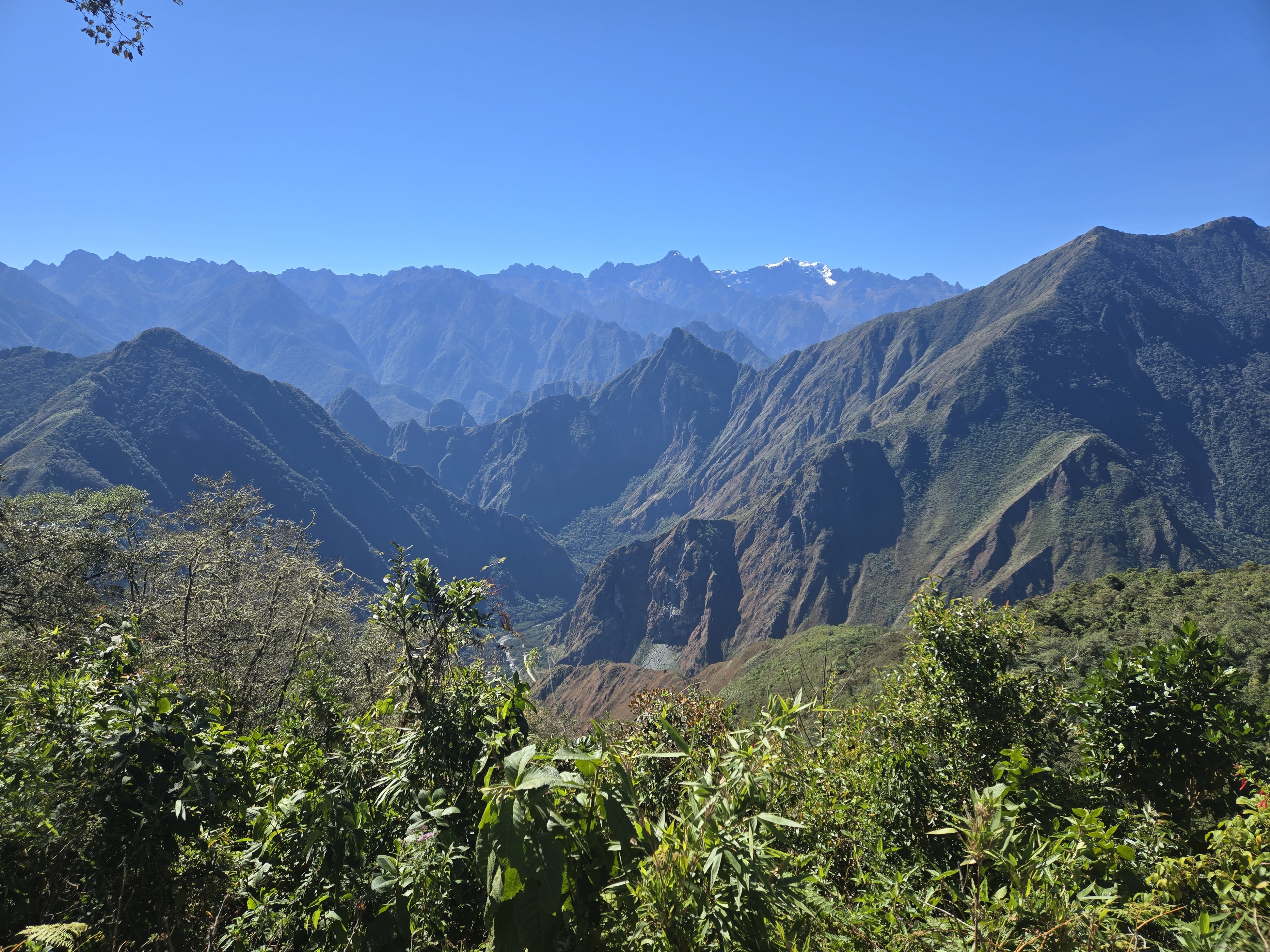
At several points, we could see Machu Picchu in the distance before reaching the site itself. After several days of hiking, seeing it appear across the mountains made the destination feel much more significant than arriving by train or bus alone.
Aguas Calientes
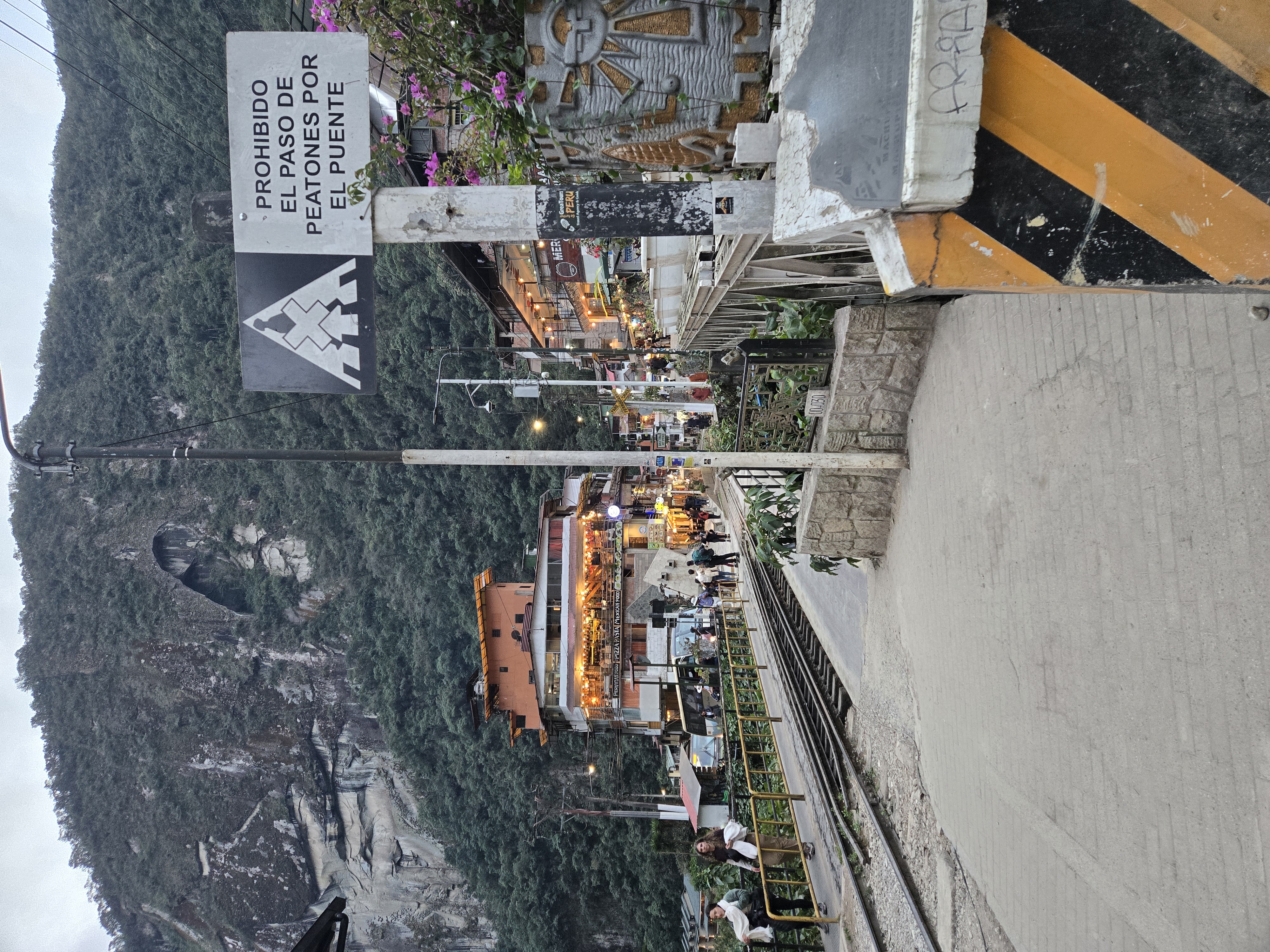
Before entering Machu Picchu, we spent time in Aguas Calientes, the primary town serving visitors to the archaeological site. The town sits in a narrow valley surrounded by steep, forested mountains, with a river and railway running through it.
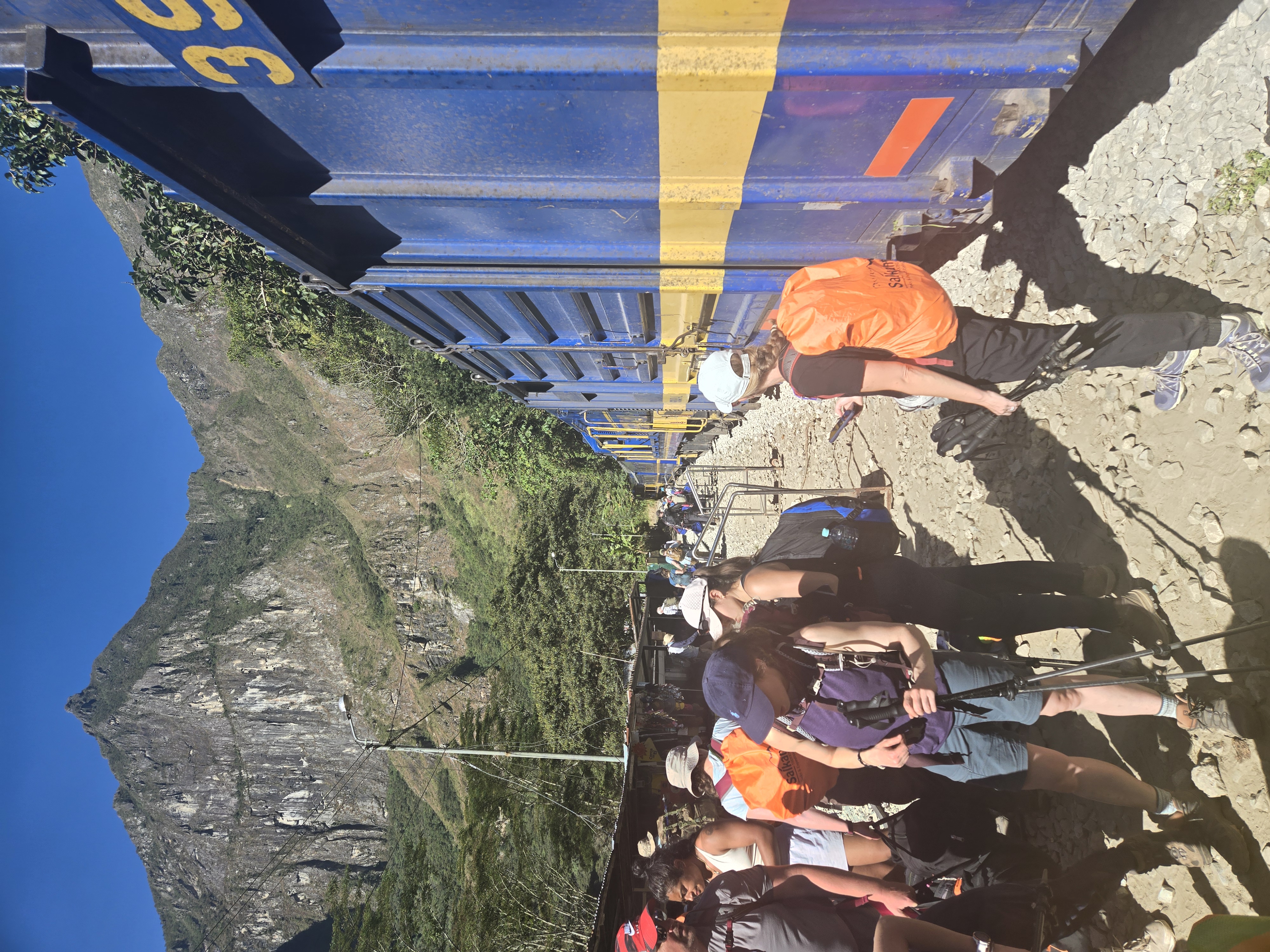
The train system connecting the region also provides some incredible views as it winds between the mountains and follows the river toward Aguas Calientes.
Machu Picchu
Machu Picchu was the culmination of the trek and the place I had most anticipated seeing. Photographs capture its basic shape, but they do not fully communicate how dramatically the site is positioned within the surrounding mountains.
The combination of architecture, elevation, terraces, clouds, and steep green peaks makes the entire setting feel almost unreal.
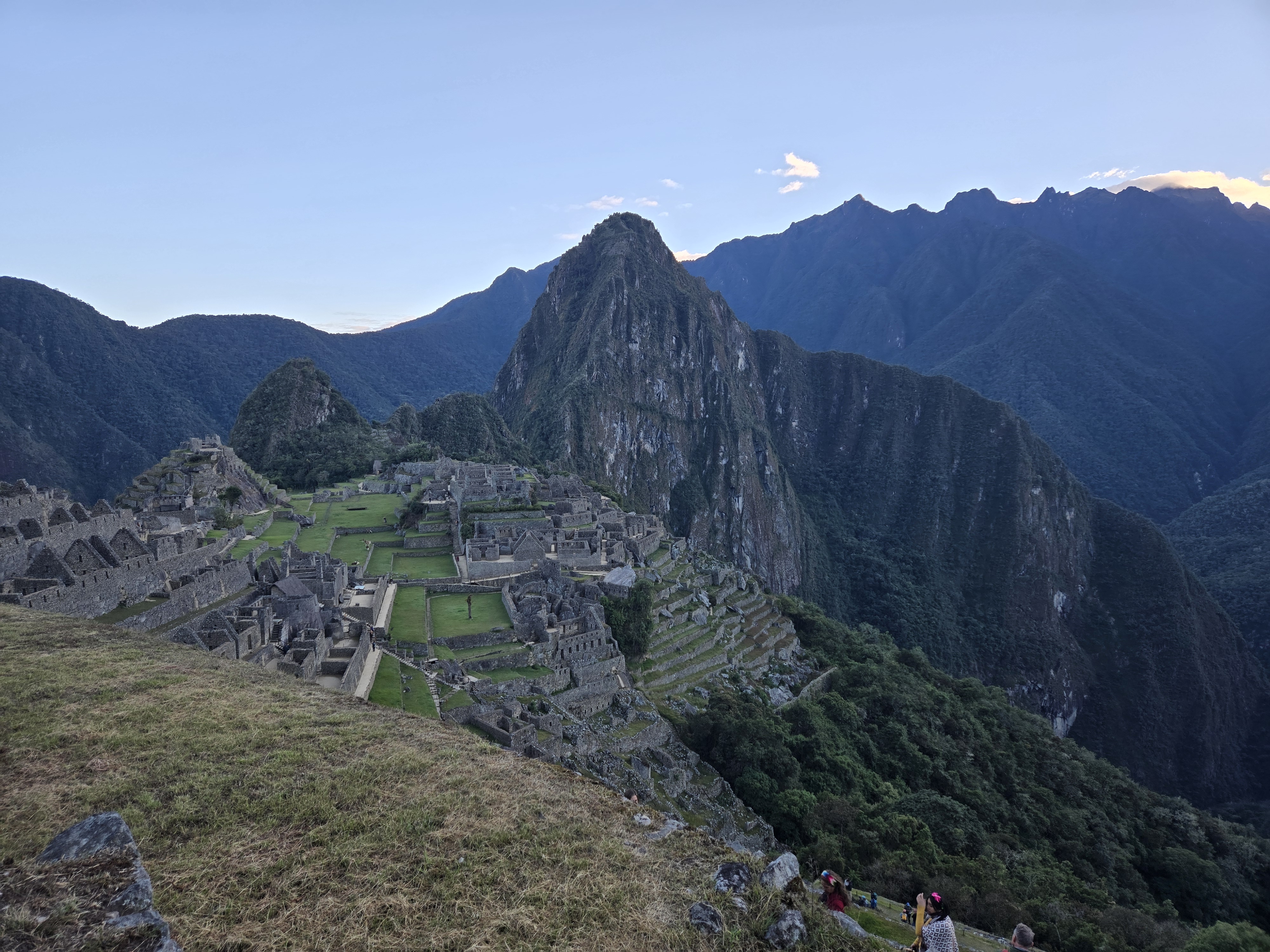
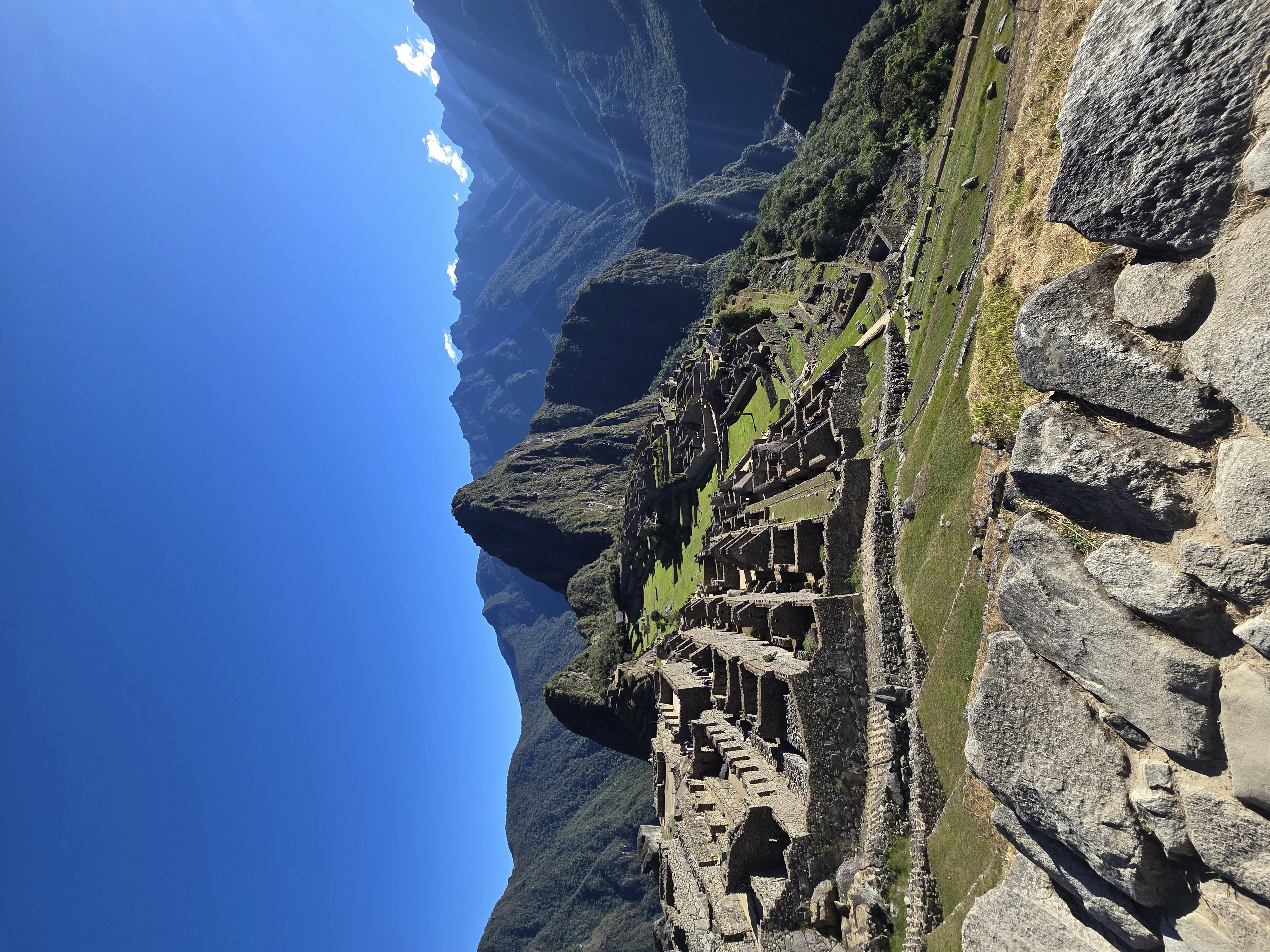
Walking through the site also makes it easier to appreciate its complexity. Machu Picchu was not simply a collection of stone buildings. It incorporated agricultural terraces, water systems, residences, ceremonial spaces, stairways, and carefully planned pathways throughout a steep mountain environment.
One of the people we learned more about was Pachakuteq, also commonly written Pachacuti, the Inca ruler whose reign is closely associated with the expansion of the Inca state. Peru Travel dates the planning and construction of Machu Picchu to around 1450 during Pachakuteq’s reign. That context made the architecture more interesting because the site was not simply placed on a mountain; its agricultural and urban sectors, terraces, drainage, water systems, and stonework were designed around the mountain itself. The natural terrain was incorporated into the architecture rather than completely reshaped to fit it.
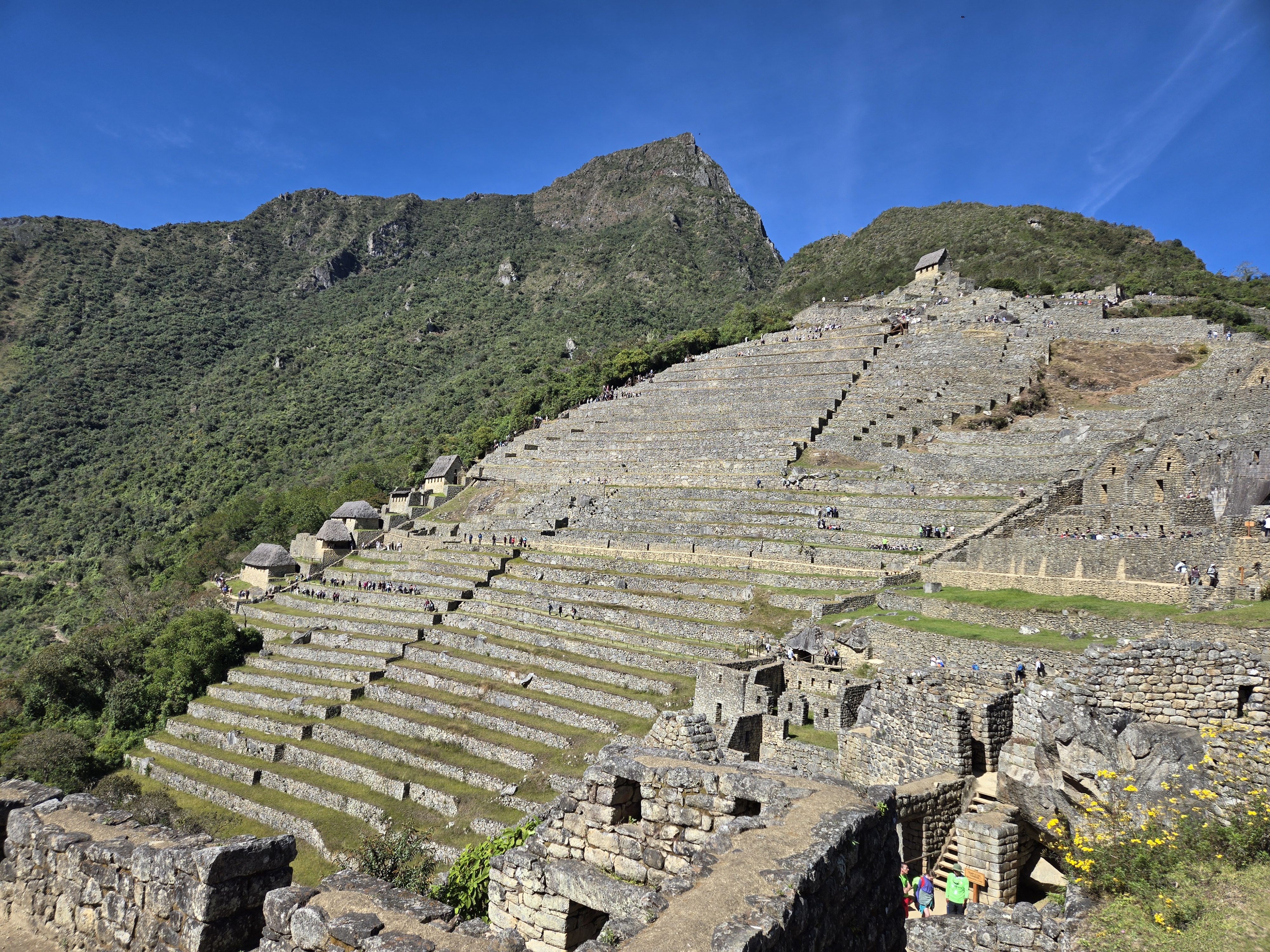
After hiking for several days, reaching Machu Picchu on foot made the experience feel like the conclusion of a much larger journey rather than a single sightseeing stop.
Rainbow Mountain and the Red Valley
Another major excursion was Rainbow Mountain and the nearby Red Valley. Rainbow Mountain reaches approximately 5,036 meters, or 16,522 feet, making it one of the highest elevations we reached during the trip.
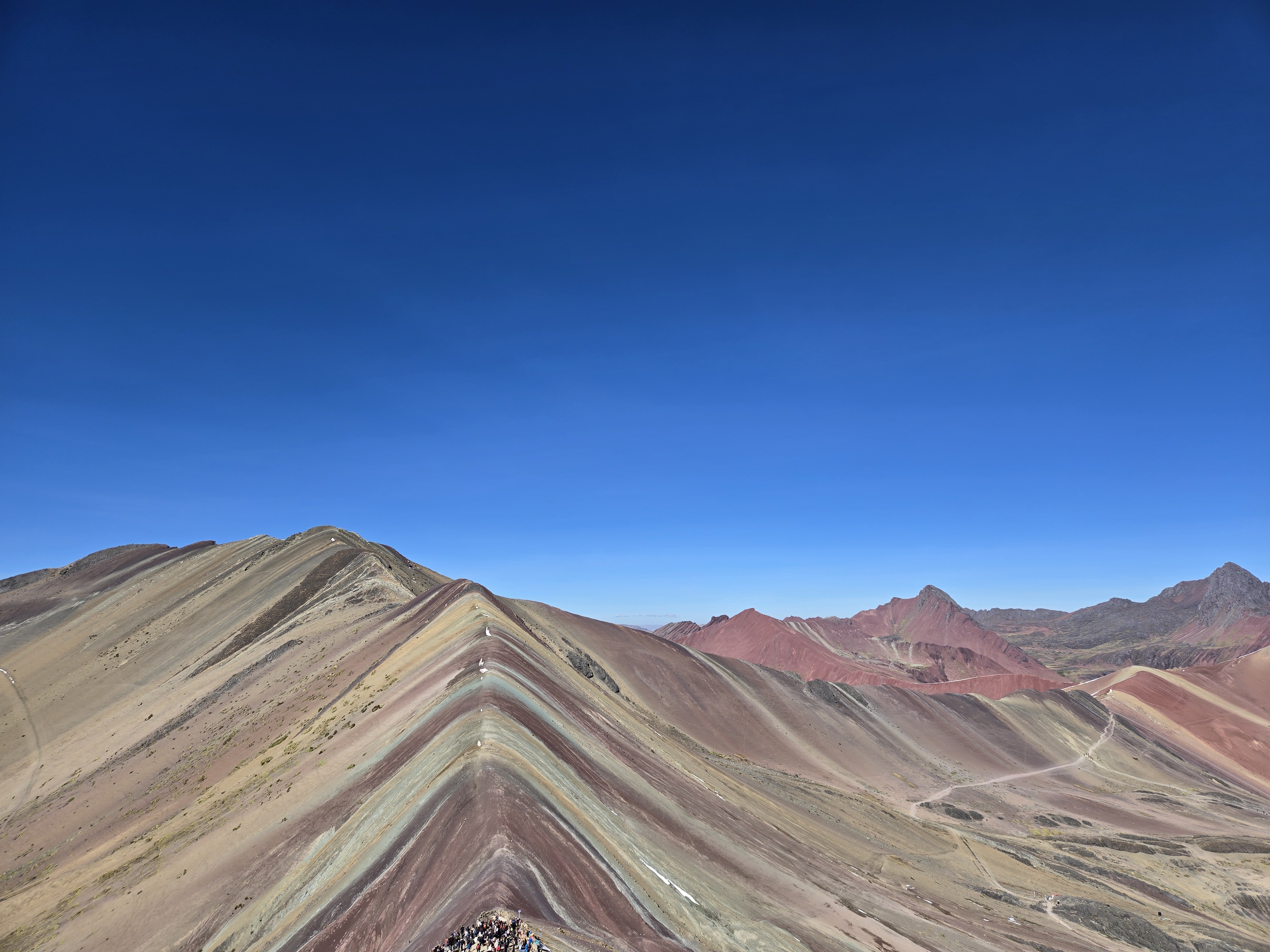
The altitude was again the greatest challenge. Even after spending several days in the mountains, walking uphill at more than 16,000 feet required a slow and deliberate pace.
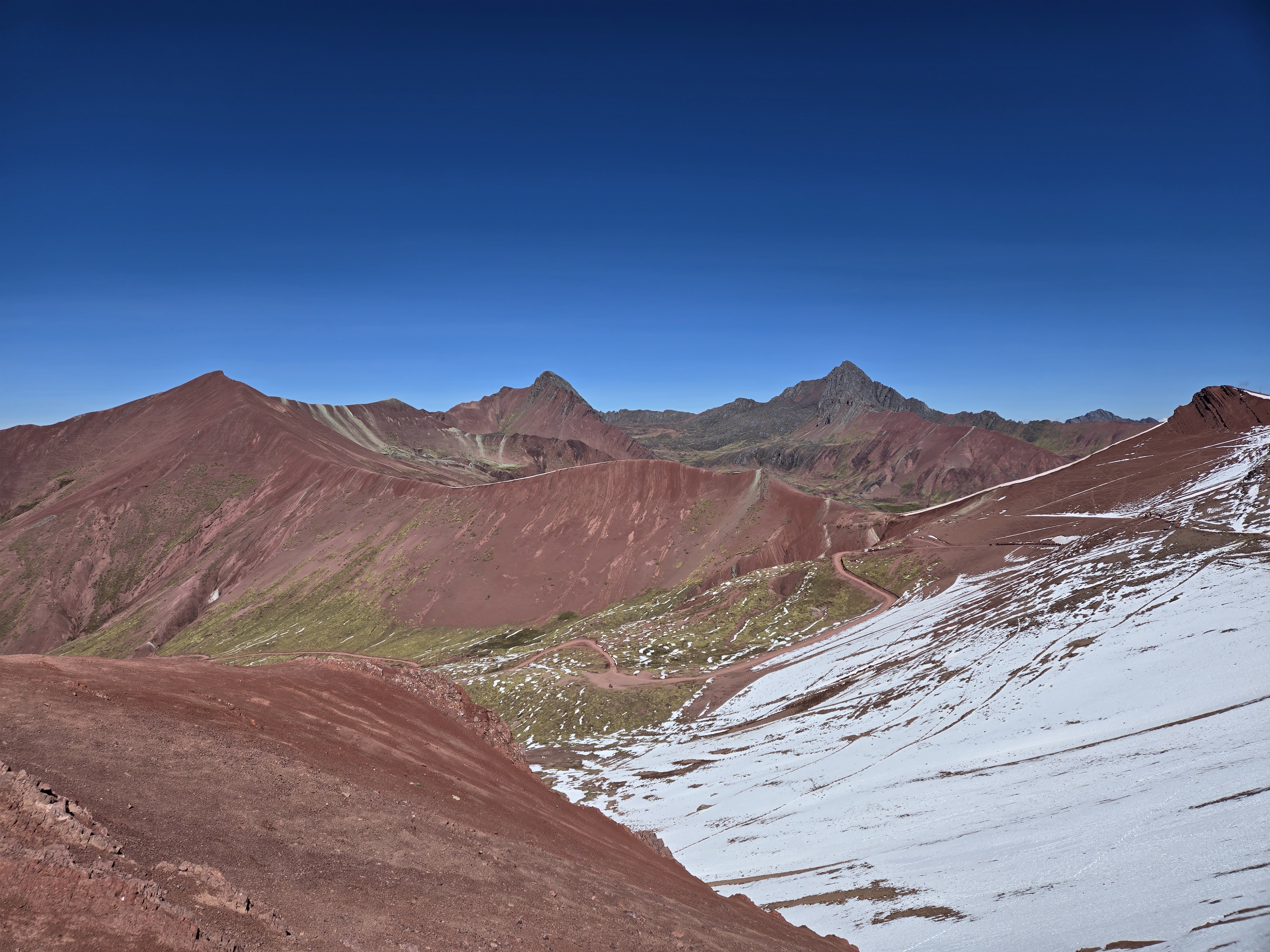
The neighboring Red Valley was equally impressive and, in some ways, even more striking. The landscape contained broad red slopes and ridgelines that looked almost like another planet.
Food in Peru
Food was another major part of the experience. Peru is famous internationally for its food, but one thing the trip made clearer was how regional Peruvian cuisine is. Cusqueñan cuisine has its own ingredients and traditions shaped by the Andes. Dishes associated with Cusco include chiri uchu, a cold mixed dish traditionally connected to Corpus Christi; adobo cusqueño, a rich pork stew; trout; choclo con queso; and several preparations of guinea pig. Peru Travel has a good overview of traditional Cusco dishes.
We tried a wide range of dishes and ingredients, including:
Alpaca
Guinea pig, traditionally known as cuy
Several varieties of ceviche
Fresh tropical fruit
Raw cacao beans
Locally grown coffee
Sugar cane
Inka Cola
Coca tea and coca leaves
The ceviche in Lima was some of the best I have ever had. It was extremely fresh, bright, acidic, and very different from many versions I had tried previously.
Guinea pig was one of the most unusual foods we sampled. It had a flavor and texture unlike anything I had eaten before. It was not necessarily something I would order regularly, but I am glad I tried it as part of the cultural experience.
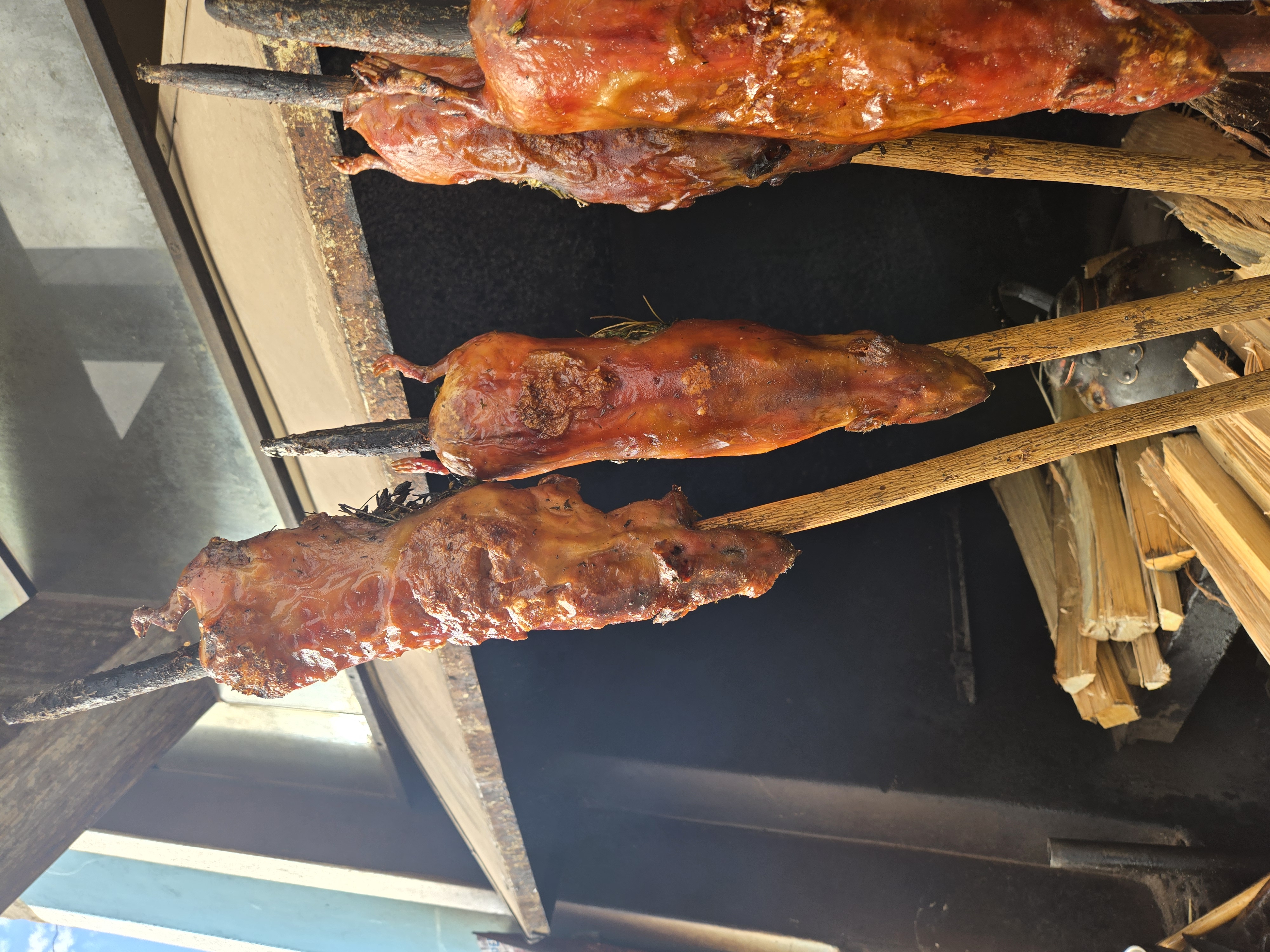
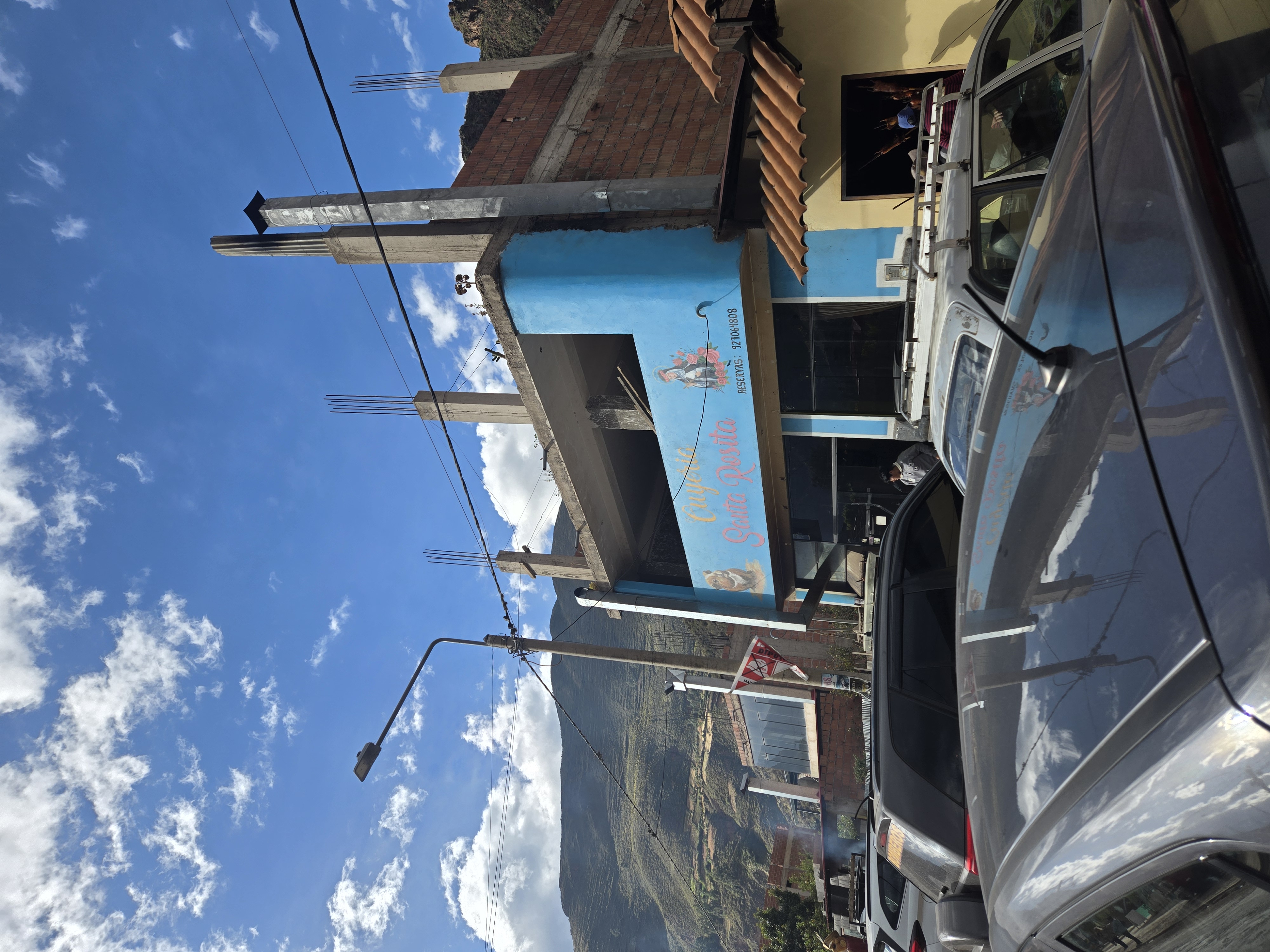
San Pedro Market in Cusco was one of the best places to explore local food at an affordable price. The market offered fruit, juices, soups, meats, baked goods, spices, and prepared meals alongside textiles and household products.
Inti Raymi and Andean Culture
We also experienced some of the celebrations surrounding Inti Raymi, or the Festival of the Sun, which takes place every June. The festival celebrates the Inca sun god and remains one of Cusco’s most important annual cultural events.
Throughout the trip, we encountered traditions connected to weaving, farming, food, music, clothing, and religious practice. Visiting the textile center and seeing how alpaca wool is processed and woven helped illustrate the amount of skill involved in creating traditional Andean clothing.
We also had opportunities to feed alpacas and learn more about how alpaca fiber is cleaned, dyed, spun, and turned into clothing and textiles.
How to recognize real alpaca
We also stopped at a shop where we were shown how to distinguish genuine alpaca fiber from some of the synthetic products sold to tourists. A few of the clues were surprisingly practical. Alpaca tends to have a smooth, soft feel and can feel cool when first touched. Good alpaca fiber also has a natural luster and is valued for being lightweight, warm, and durable. Peru remains one of the world’s major producers of alpaca fiber, and Perú Info has more background on the fiber and textile industry.
The shop also demonstrated a burn test using a loose fiber sample. Animal protein fibers behave differently from many synthetics: they tend to smell like burning hair and leave a brittle ash, while many synthetic fibers melt and leave a harder plastic-like residue. That demonstration was useful, but it is not a perfect authentication test. It can help distinguish natural animal fiber from some synthetics, but it cannot prove that a garment is specifically alpaca or tell you the percentage of alpaca in a blend. The best indicators are still the fiber-content label, the quality and consistency of the material, and buying from a reputable producer or textile center. The Centro de Textiles Tradicionales del Cusco is also worth visiting for anyone interested in traditional weaving and textile production.
The condor in Andean culture
We also learned about the importance of the Andean condor in Inca and broader Andean symbolism. What is sometimes described to visitors as the “legend of the condor” is better understood as part of a larger cosmology rather than one single story. In a common three-part interpretation, the condor is associated with the celestial or upper world, the puma with the earthly world, and the serpent with the world below. The condor was also understood as a messenger capable of connecting the earthly and spiritual realms. Peru Travel has a useful explanation of these sacred animals and their symbolism.
Music and everyday life
Music was another small but interesting window into regional differences. Cumbia and salsa were common, but musical tastes and styles changed depending on where we were. Peru has developed its own forms of cumbia, and the Amazon has a particularly distinctive tradition known as cumbia amazónica. Beginning in the Peruvian Amazon in the late 1960s, it blended cumbia with regional and Andean influences as well as electric-guitar and psychedelic sounds. In Lima, related styles became associated with chicha. The Smithsonian Folklife Festival’s overview of Peruvian urban music is a good introduction to how these styles developed.
Politics during the trip
Politics were also interesting simply because our trip overlapped with Peru’s 2026 election period. One fact that surprised me was learning that voting is compulsory for many eligible Peruvian citizens and that failing to vote can result in a fine. The exact rules and fine amounts depend on the election and the voter’s circumstances, so the Jurado Nacional de Elecciones is the best place to check current information.
What I found most interesting was hearing people talk about the election themselves. Rather than only reading about Peruvian politics from the outside, we were able to listen to different people describe what mattered to them and how they viewed the election. It was a useful reminder that a country’s politics always look more complicated when you hear directly from the people living through them.
Trekking Company
For anyone interested in completing a similar trip, we used Salkantay Trekking.
The company was professional and well organized, especially compared with some of the other trekking operations we observed along the route. Transportation, accommodations, food, entrance arrangements, and guides were coordinated in advance, which allowed us to focus on the experience itself.
Our guide was knowledgeable about the trail, Inca history, local culture, wildlife, and plant life. The chefs also managed to prepare surprisingly elaborate meals despite working from temporary kitchens along the trail.
The company offers several different packages and routes. Our experience included glamping-style accommodations, while some versions of the traditional Inca Trail involve more basic backcountry camping conditions. I originally expected our accommodations to be much more rugged, so the level of comfort was a pleasant surprise.
Useful Links & Sources
For anyone planning a similar trip or wanting to learn more about the places and topics mentioned above:
- Cusco: Cusco Cathedral · Qorikancha · Centro de Textiles Tradicionales del Cusco · San Pedro Market
- Hotel: Taypikala Hotel Cusco
- Sacred Valley: Sacred Valley — Peru Travel · Pisac Archaeological Park — MINCETUR · Ollantaytambo — Peru Travel
- Vilcabamba: Ministry of Culture background on Vilcabamba and Manko Inka
- Nazca: Nazca Lines — Peru Travel · Nazca and Palpa — UNESCO World Heritage Centre · María Reiche and conservation — Ministry of Culture
- Machu Picchu: Machu Picchu — Peru Travel
- Peru’s climates and biodiversity: Peru Travel — Biodiversity · Peru Travel — Climate
- Culture: Sacred animals in Inca culture · Smithsonian — Peruvian urban music and cumbia
- Food: Traditional Cusco dishes — Peru Travel
- Alpaca and textiles: Perú Info — Alpaca fiber · Centro de Textiles Tradicionales del Cusco
- Elections: Jurado Nacional de Elecciones — Electoral fines
- Trekking: Salkantay Trekking
Final Thoughts
Peru was one of the most varied trips I have taken. Within a relatively small geographic area, we moved from colonial cities and ancient ruins to glaciers, high-altitude mountain passes, cloud forests, tropical farms, and dense jungle.
The altitude, illness, and long days of hiking made portions of the trip challenging, but those difficulties also made the experience more memorable. Reaching Salkantay Pass, seeing Machu Picchu emerge in the distance, preparing coffee from locally grown beans, and walking through landscapes that changed almost daily were all experiences I will remember for a long time.
Machu Picchu may have been the destination, but the journey through Peru was what made the trip truly meaningful.